


Key Takeaways
- Analog video transmitters and cameras cost roughly $15-40 per component and run 8-18ms latency, versus $499+ goggles and 24-40ms for a digital system like DJI O4 (UAVMODEL Insights, 2026). - That low latency, not nostalgia, is why analog remains the default choice for racing and tiny whoop flying in 2026. - Analog is also a completely reasonable permanent choice, not just a starter tier you outgrow.
Digital FPV has been the "better" video system on paper for years, and analog is still everywhere: on race tracks, in tiny whoops, and as the default recommendation for FPV beginners on a budget. That's not inertia. Analog does one specific thing better than any digital system currently on the market, and for a lot of pilots, that one thing is the only thing that matters.
What Is Analog FPV, Technically?
Analog FPV transmits an unprocessed video signal directly from the drone's camera to your goggles, with nothing compressed or decoded along the way. That simplicity is exactly what keeps its latency down to 8 to 18 milliseconds, versus 24 to 40 milliseconds for a digital system like DJI's O4, which has to process and compress the feed before it reaches your eyes (UAVMODEL Insights, 2026).
The tradeoff is image quality: analog tops out around 480i to 720p depending on the camera, well short of digital's 1080p. For most of the hobby's history that gap was the whole story. It still is, for anyone whose priority is reaction time over image clarity.
Why Does Latency Matter More Than Image Quality for Some Pilots?
Racing and tight, obstacle-dense flying reward the pilot who reacts fastest, not the one with the sharpest view. A few extra milliseconds of delay is the difference between clipping a gate cleanly and clipping it wrong, which is exactly why analog and low-latency systems like HDZero still dominate competitive racing even years after high-resolution digital systems became available.
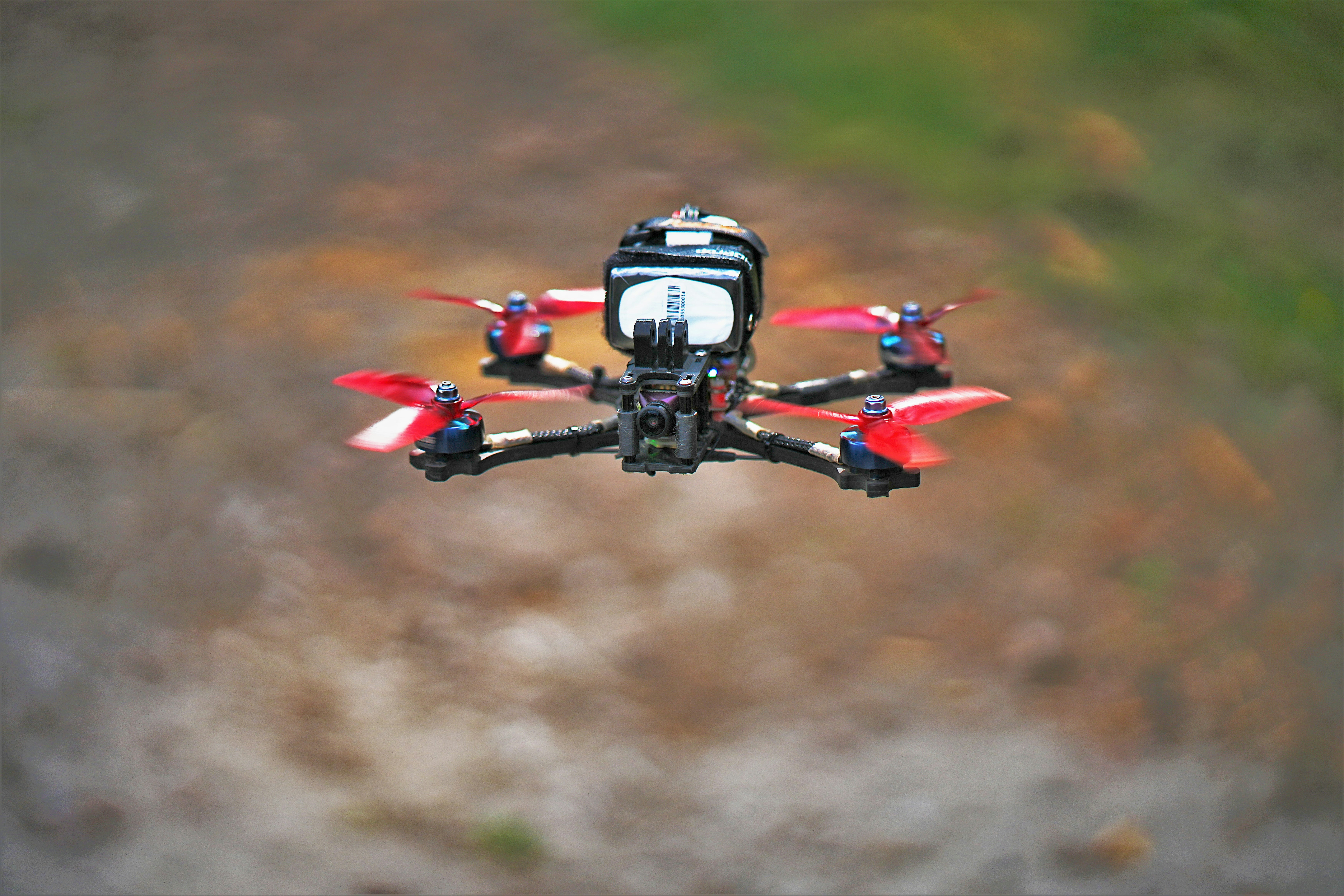
Tiny whoop flying shares the same logic at a smaller scale. Indoor obstacles are close and unforgiving, and the weight savings of an analog video transmitter over a heavier digital unit matter more on a drone that small.
Is Analog Just a Beginner Tier?
No. It's a legitimate permanent choice for racing, whoops, and anyone who values reaction time or budget over image quality, not a starter system every serious pilot eventually replaces. Plenty of experienced competitive pilots fly analog by choice, not out of necessity.
Where analog does function as a genuine starting point is cost. At $15 to $40 per component versus hundreds of dollars for a digital goggle set, it's the cheapest way to build real flying skill before deciding whether digital's image quality is worth paying for. The full FPV budget breakdown covers exactly how much that price gap matters at each stage.
That said, not every current guide treats analog as the automatic beginner default. One 2026 goggle buying guide recommends going digital from the start if budget allows, arguing the clarity jump over analog makes learning easier, not just the footage nicer (ModelRec, 2026). Both positions are defensible; which one applies to you comes down to budget more than any technical argument.
Frequently Asked Questions
Yes, for racing, tiny whoops, and budget-conscious beginners specifically. Its 8-18ms latency still beats digital systems, and it costs a fraction as much per component (UAVMODEL Insights, 2026).
Analog sends an unprocessed video signal with no compression or decoding step, while digital systems process the feed before display, which adds delay even though the resulting image is sharper.
Yes. Competitive racing in particular still favors analog and other low, fixed-latency systems, since reaction time matters more than image quality when the margin between pilots is fractions of a second.
Image quality. Analog tops out around 480i to 720p depending on the camera, well below digital's 1080p, which matters more for cinematic or long-range flying than it does for racing.
Conclusion
Nothing on the market beats analog's latency for its price, which is the entire reason it's survived years of "better" digital systems launching around it. That's not a nostalgia argument, it's a physics one: less processing means less delay, full stop.
Treat it as a legitimate destination for racing and whoops, not just a rung on the way to digital. The direct comparison against DJI and Walksnail lays out both sides if you're still weighing the tradeoff.
Sources
- UAVMODEL Insights, FPV Goggle Comparison 2026: DJI O4 vs Walksnail vs HDZero vs Analog, Resolution, Latency, and Best Choice by Flying Style, retrieved 2026-08-28, https://blog.uavmodel.com/fpv-goggle-comparison-2026-dji-o4-vs-walksnail-vs-hdzero-vs-analog-resolution-latency-and-best-choice-by-flying-style/
- ModelRec, 12 Best FPV Goggles for Beginners (August 2026), retrieved 2026-08-28, https://modelrec.com/best-fpv-goggles-for-beginners/


