


Key Takeaways
- Buy the radio transmitter before the drone. It's the one part that survives every future upgrade, while a locked-in RTF bundle usually gets thrown away (Droneer, 2026). - In 2026, a complete outdoor FPV setup runs $500 for analog up to $1,400+ for a fully loaded digital HD rig, but you can start for about $85 with a budget radio and simulator software alone (Oscar Liang, 2026). - Batteries, chargers, and spare props are the costs "starter kit" sticker prices routinely leave out, and a wrong charger setting is one of the most common causes of LiPo fires.
In 2026, a fully loaded digital HD FPV setup, drone, goggles, radio, batteries, can run past $1,400. A working start costs about $85: a budget radio and simulator software, no drone yet (Oscar Liang, 2026). Most beginners never see that gap, because most beginner guides sell a bundle, not a plan.
That's the actual problem with FPV shopping. It isn't a lack of options, it's the order. Buy the wrong thing first and you either overspend on gear you're not ready to use, or underspend on gear you'll replace within a month. This guide is a buying order, not a product list: what to get first, what to get second, and which categories have their own deeper guide once you're ready for the details.
What Order Should You Buy FPV Gear In?
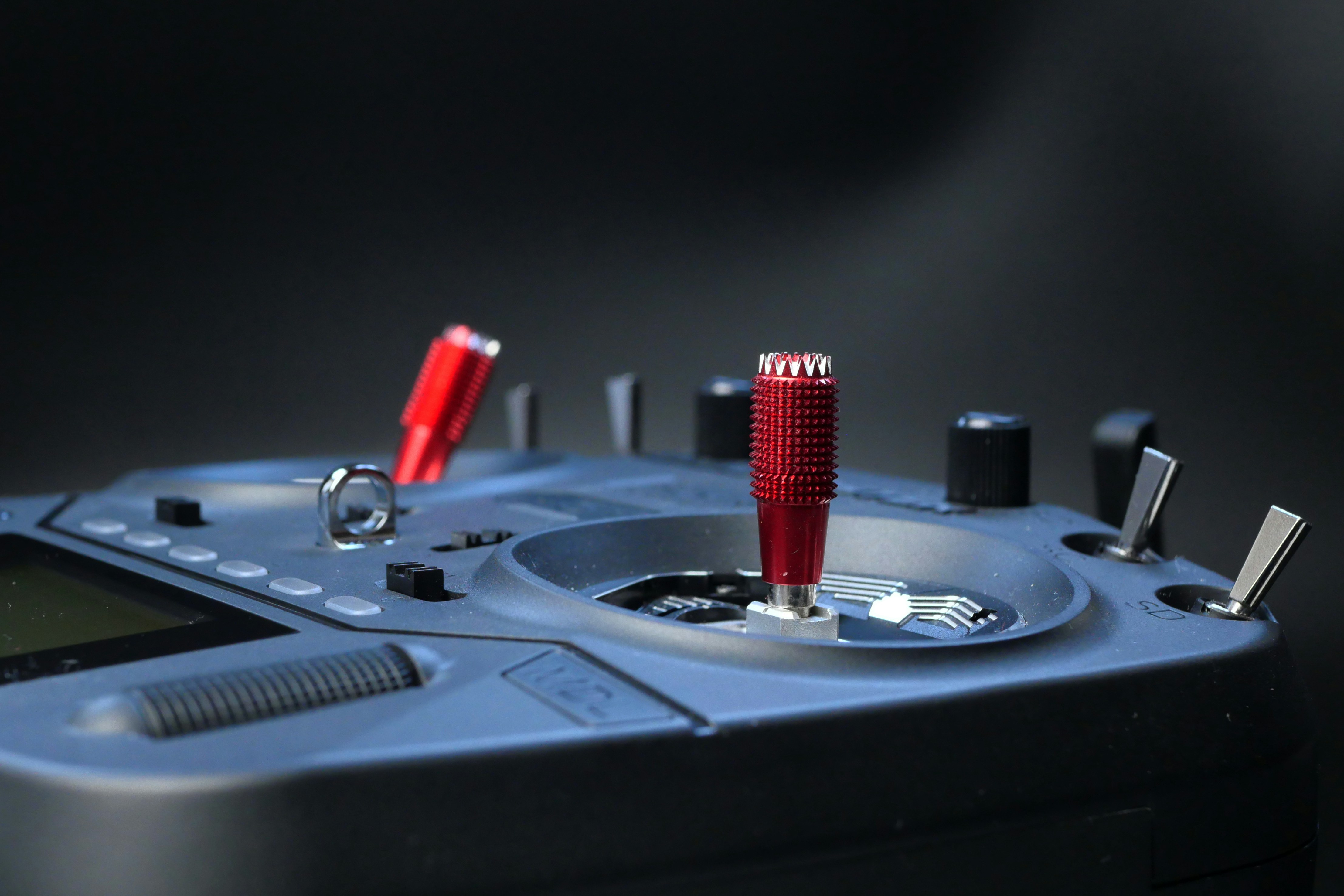
Buy the radio transmitter before the drone. RTF (Ready-to-Fly) bundles pack in a proprietary radio and goggles that get replaced the moment you outgrow them, while a quality radio bought on its own carries forward to every drone you ever own (Droneer, 2026).
That's a real regret pattern, not a hypothetical one. RTF, BNF (Bind-and-Fly), and PNP (Plug-and-Play) all describe how much of the system a kit includes. RTF includes everything: radio, goggles, drone, battery, charger. BNF skips the radio, so you bring your own. PNP skips the radio and the battery system entirely, aimed at pilots who already own both.
The RTF path feels easiest on day one, and it is. The catch shows up a few months in, when you want a second drone and discover the included radio and goggles are toy-grade components you'll outgrow fast, and upgrading them means buying entirely new gear rather than reusing what you already own (Droneer, 2026).
So the practical order looks like this: radio first, then simulator time, then a video system decision, then your first real drone, then the batteries and chargers that "starter kit" pricing tends to leave out. Each of those gets its own deeper guide below, starting with the full RTF vs. BNF vs. PNP breakdown if you want the complete case for each path.
Should You Practice in a Simulator Before You Buy Anything?
Yes. Sim time before your first real flight is one of the few pieces of advice that shows up consistently across personal accounts, forum threads, and vendor guides alike, not just one source repeating itself. It's also free once you own a radio, since FlightDivision's simulator runs in-browser with no drone required.
Multiple 2026 FPV training guides link simulator hours to fewer real-world crashes and lower repair spend once pilots do buy hardware, though the exact size of that effect varies by source and methodology, so treat any specific multiplier you see quoted with some skepticism. What's consistent is the direction, not a precise number.
This is also the one place a gear guide can recommend a specific product without it being a sales pitch: if you already own a radio, you can practice the actual stick coordination FPV requires for exactly $0 before you spend another cent. How many sim hours before your first real flight breaks that timeline down in more depth, and why sim time pays off before real flight covers the crash-cost math directly.
How Much Does a Complete FPV Setup Actually Cost?
A full outdoor FPV setup runs $200 to $1,400 or more in 2026, with the analog route landing around $300 to $500 and a full "buy once" digital HD setup starting near $1,000, since the video system is the single biggest cost swing in the entire hobby (YRDrone, 2026). The cheapest legitimate entry point, a budget radio plus simulator software, costs around $85 (Oscar Liang, 2026). The full budget breakdown by tier covers exactly where that money goes at each price point.
What a Realistic FPV Budget Looks Like (2026)
Video system choice is what actually moves the total, not the drone itself.
- Radio + simulator only; approximately $85
- RTF analog starter kit; approximately $300
- Full analog 5-inch setup; approximately $500
- Full digital HD setup; approximately $1000
Marketed "starter kit" prices routinely quote the low end of that range and leave out batteries beyond the one included, a charger, and spare propellers, all of which you'll need within your first few flying sessions. Budget an extra $50 to $100 on top of any kit's sticker price for exactly that.
Is FPV actually an expensive hobby, then? Not at the entry point, no. The market itself keeps growing quickly. MultiGP, the largest FPV racing league, now counts more than 30,000 registered pilots (MultiGP, 2026), which says more about staying power than the on-ramp cost ever could.
Your First Real Purchase: Radio and Simulator ($85 to $200)
A beginner-appropriate ELRS radio costs $50 to $200 in 2026, depending mostly on gimbal quality, and it's the single purchase that carries forward through every drone you'll ever fly (AeroVisionDrones, 2026).
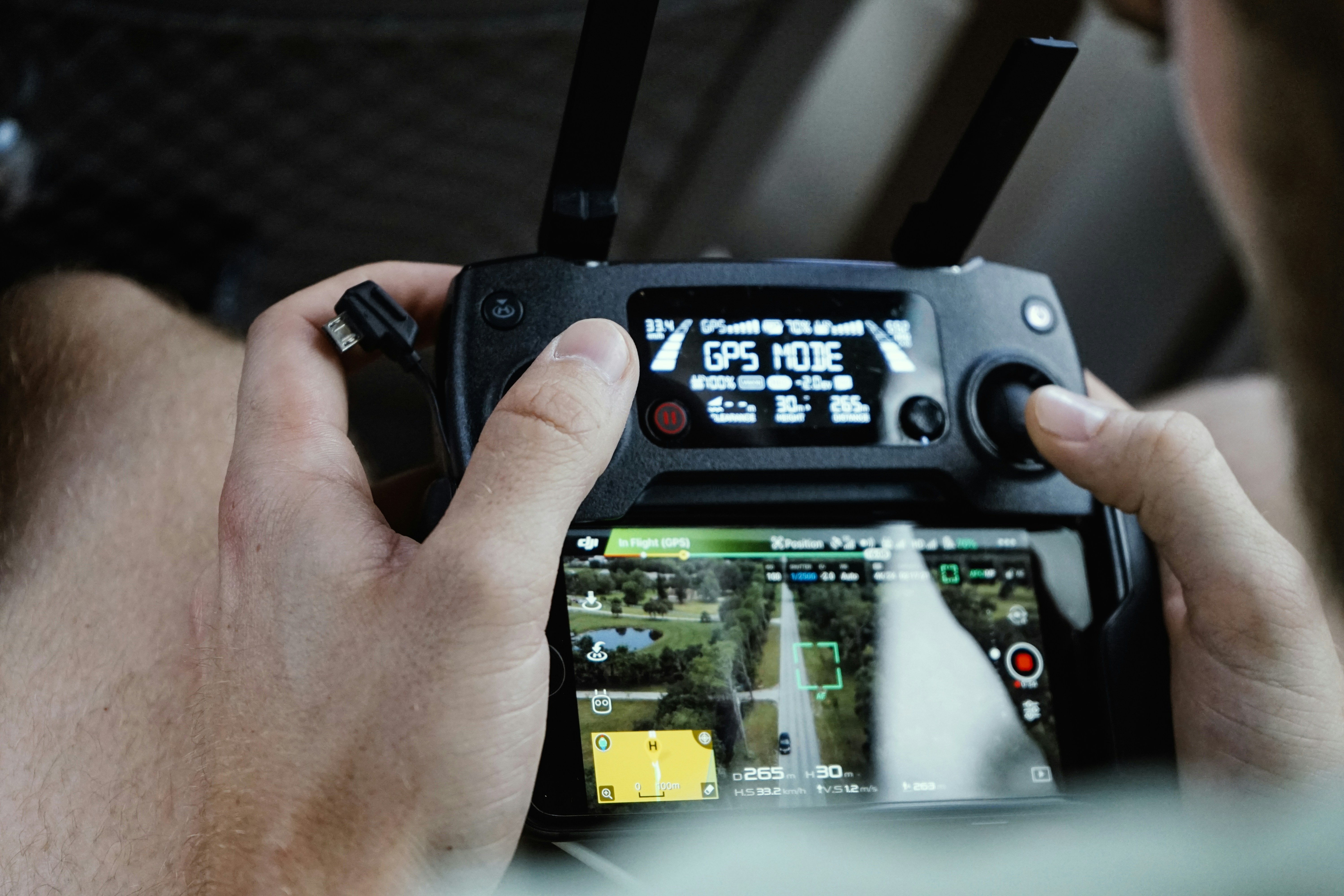
Budget radios in this range trade off stick size for price. One hobbyist forum discussion of a popular sub-$100 radio noted its smaller gimbals take real getting used to, and mentioned 3D-printing longer sticks as a workaround, versus stepping up to a radio with full-size hall-effect gimbals for closer to $150. That's one pilot's experience, not a universal complaint, but it's worth trying a radio in person before buying if you can.
What actually matters for a first radio: ExpressLRS (ELRS) support, since it's the open-source protocol nearly every modern receiver expects, and hall-effect gimbals if your budget stretches that far, since they hold calibration better over years of use than the cheaper potentiometer gimbals in entry radios.
Which radio to buy covers the specific model picks, and where to buy the drone that pairs with it is the next decision once your radio's already chosen.
Choosing Your Video System: Analog, DJI, or Walksnail?
Analog remains the cheapest and lowest-latency video option, DJI's O4 system gives the sharpest image and longest range, and Walksnail's Avatar HD has closed most of its latency gap with DJI in 2026, down to roughly 4 to 6 milliseconds from an 8 to 12 millisecond gap in 2024 (UAVMODEL Insights, 2026).
| Analog | DJI O4 | Walksnail Avatar HD | |
|---|---|---|---|
| Video quality | Standard definition | Best in class, sharpest image | Matches DJI resolution, slightly softer |
| Latency | Lowest, 8-18ms | 24-40ms glass-to-glass | Has closed most of its 2024 gap with DJI |
| Typical full-system cost | Cheapest tier | ~$778 (Air Unit + Goggles 3, 2026) | ~$598 (Avatar HD Pro + Goggles X, 2026) |
| Ecosystem | Open, any goggle works | Closed, DJI goggles only | Open, works with third-party goggles too |
None of these is a wrong answer for a beginner. Analog is the cheapest way to learn the fundamentals without much financial risk. DJI is the safest choice if image quality is what you care about most and you don't mind its closed ecosystem. Walksnail sits in between: nearly DJI's video quality, an open system, at a lower total cost.
Analog vs. digital FPV in more depth, what analog actually gets you in 2026, is the DJI system worth it for beginners, and Walksnail as a DJI alternative each go deeper on one side of this decision.
Your First Drone: Whoop, Starter Kit, or Full Build?
Most beginners should start on a tiny whoop or an RTF starter kit, not a full 5-inch build. A whoop crash costs a $5 to $10 part. A 5-inch crash can cost $50 or more in frame, motor, and prop damage, which matters enormously in the first weeks when crashes are frequent by default.
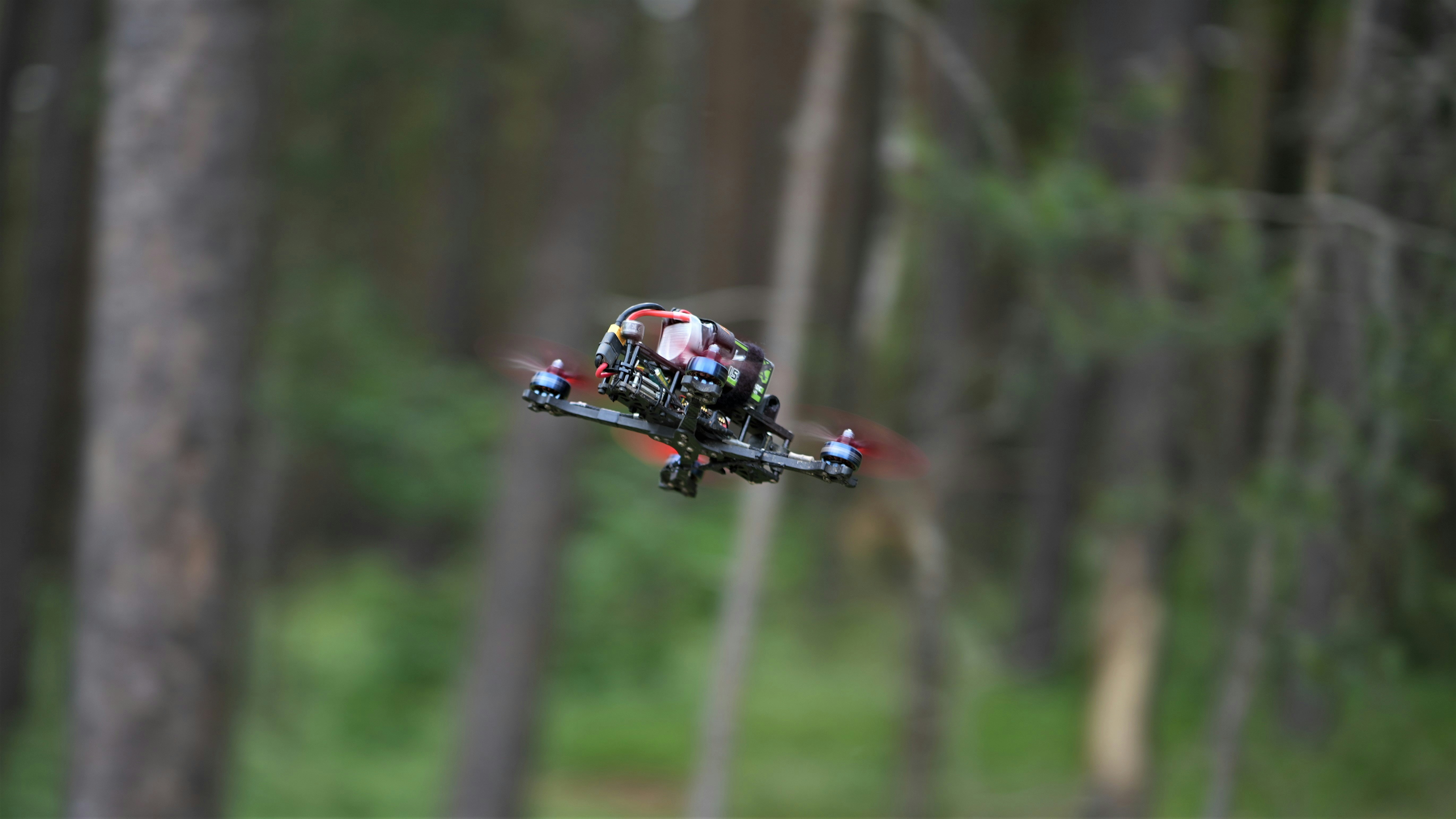
A tiny whoop's durability is exactly why it works as a first drone: it survives the crash volume a total beginner generates, indoors, where weather and space aren't a factor either. Once takeoff, turning, and stopping feel controlled, either upgrading to a bigger RTF kit or a full custom build makes sense, and by that point you already own the radio both paths reuse.
A full build only makes sense once you already own the radio and goggles it needs, since building without those first means guessing at compatibility before you've flown anything. The full parts list and build order, best starter kits if you'd rather not build, and why a tiny whoop is worth starting on each cover one branch of this decision.
There's also a middle path worth naming: BNF drones. Since BNF skips the radio and goggles entirely, buying one only works once your radio choice is already locked in, but it avoids both RTF's disposable-gear problem and a full build's assembly time. For a pilot who already has a radio from the section above, a BNF whoop or 3-inch quad is often the fastest way to get in the air.
The Gear You'll Forget to Budget For (Batteries, Chargers, Spares)
Battery, charger, and spare-prop costs routinely don't show up in a "starter kit" sticker price, and in 2026, using a generic charger not designed for LiPo cells remains one of the leading causes of LiPo battery fires, alongside overcharging and physical damage (HobbyKing, 2026).
A smart charger that matches your battery's cell count and connector type, and always uses balance-charge mode rather than a basic charge setting, is the safe default. Whoops typically run 1S batteries; larger freestyle and racing drones run 4S to 6S, so check what your specific drone needs before buying a charger that can't handle it.
Buy at least three batteries from day one, not the one that usually ships in a kit. A single battery means every flight ends the moment it's depleted, which turns a practice session into ten minutes of flying and twenty minutes of waiting on a charger. Three batteries in rotation is enough to fly, swap, and charge without downtime, and the batteries themselves are the cheapest line item in the whole setup.
Which chargers and batteries to buy covers the specific models and safety checklist in more depth than fits here.
Frequently Asked Questions
The radio transmitter, before the drone. It's the one component that carries forward to every future drone you own, while an RTF bundle's included radio and goggles typically get replaced on your first upgrade (Droneer, 2026).
It's strongly recommended. Sim time before a first real flight is consistently linked to fewer crashes and lower repair costs across multiple 2026 FPV training guides, even though the exact size of that effect varies by source.
Analog is cheaper and has the lowest latency; digital systems like DJI O4 and Walksnail Avatar HD give sharper video and better range at a higher price (UAVMODEL Insights, 2026). Neither is a wrong first choice.
Between about $85 for a budget radio and simulator software and $1,400 or more for a complete digital HD setup, depending on video system and whether you already own a radio (Oscar Liang, 2026).
RTF is fine for a genuine first drone, but expect to replace its bundled radio and goggles once you outgrow them. BNF lets you invest once in a quality radio and goggles you reuse across every drone that follows.
Conclusion
Radio first, then simulator time, then a video system decision, then your first real drone, then the batteries and chargers most kit prices leave out. That order is the entire guide, everything above just fills in the details. Get the sequence right and you sidestep both the RTF lock-in regret and the sticker-price surprise that catches most first-time buyers.
None of it needs to happen today. FlightDivision's simulator is free, runs in your browser, and builds the exact stick skills every path above eventually requires, before a single dollar leaves your account. Browse the full gear directory whenever you're actually ready to spend.
Sources
- Droneer, RTF vs BNF vs PNP FPV Drones: What Beginners Should Buy, retrieved 2026-08-28, https://droneer.com/fpv-guides/rtf-vs-bnf-vs-pnp-fpv-drones-what-beginners-should-buy/
- Oscar Liang, The Best Beginner FPV Drone Bundles To Get Started (From $50 to $1500), retrieved 2026-08-28, https://oscarliang.com/beginner-fpv-drone-bundles/
- YRDrone, How Much Does an FPV Drone Cost in 2026?, retrieved 2026-08-28, https://yrdrone.com/blog/industry-news/how-much-does-fpv-drone-cost-2/
- AeroVisionDrones, 15 Best Drone Radio Transmitters for Beginners, retrieved 2026-08-28, https://www.aerovisiondrones.com/best-drone-radio-transmitters-for-beginners/
- UAVMODEL Insights, DJI O4 Air Unit vs Walksnail Avatar HD: The 2026 FPV Video System Showdown, retrieved 2026-08-28, https://blog.uavmodel.com/dji-o4-air-unit-vs-walksnail-avatar-hd-the-2026-fpv-video-system-showdown/
- HobbyKing, LiPo Battery Safety Guide (2026): Prevent Fires, Charge & Store Right, retrieved 2026-08-28, https://www.hobbyking.com/en_us/blog/LiPoBatteryExplosionRiskPreventionGuide
- MultiGP, Global Qualifier, retrieved 2026-08-28, https://www.multigp.com/globalqualifier/


