


Key Takeaways
- Analog runs 8-18ms latency and costs $15-40 per component; DJI O4 runs 24-40ms glass-to-glass but delivers sharper 1080p video with better penetration through obstacles (UAVMODEL Insights, 2026). - For beginners specifically, budget analog goggles remain a legitimate starting point precisely because the price gap to digital is so large. - The right choice depends on flying style more than budget alone: racing favors low, fixed latency; freestyle and cinematic flying favor image quality.
Analog and digital FPV solve the same problem, seeing what your drone sees, at very different price points and with very different tradeoffs. Neither is a wrong first choice, but they optimize for different things, and knowing which one matters to you first saves you from buying the wrong system twice.
How Do Analog and Digital FPV Actually Compare?
Analog video transmitters and cameras cost roughly $15 to $40 each and run 8 to 18 milliseconds of latency, while DJI's O4 digital system runs 24 to 40 milliseconds glass-to-glass but delivers sharp 1080p video at up to 100 frames per second with noticeably better penetration through obstacles like trees (UAVMODEL Insights, 2026).
| Analog | Digital HD (DJI O4-class) | |
|---|---|---|
| Latency | 8-18ms | 24-40ms glass-to-glass |
| Image quality | 480i to 720p | 1080p at up to 100fps |
| Cost per component | $15-40 | $499+ for goggles alone |
| Best for | Racing, whoops, tight budgets | Freestyle, cinematic, long range |
That latency gap surprises most beginners, since digital's sharper image feels like it should be the faster system too. It isn't. Analog's simplicity, an unprocessed video signal with nothing to compress or decode, is exactly what keeps its latency so low.
When Does Analog Make More Sense?
Analog makes the most sense when latency matters more than image quality, which is most true for racing and for indoor tiny whoop flying where obstacles are close and reaction time counts more than seeing a crisp image. It's also, by a wide margin, the cheaper way into the hobby, and that price gap alone is a legitimate reason to start here.
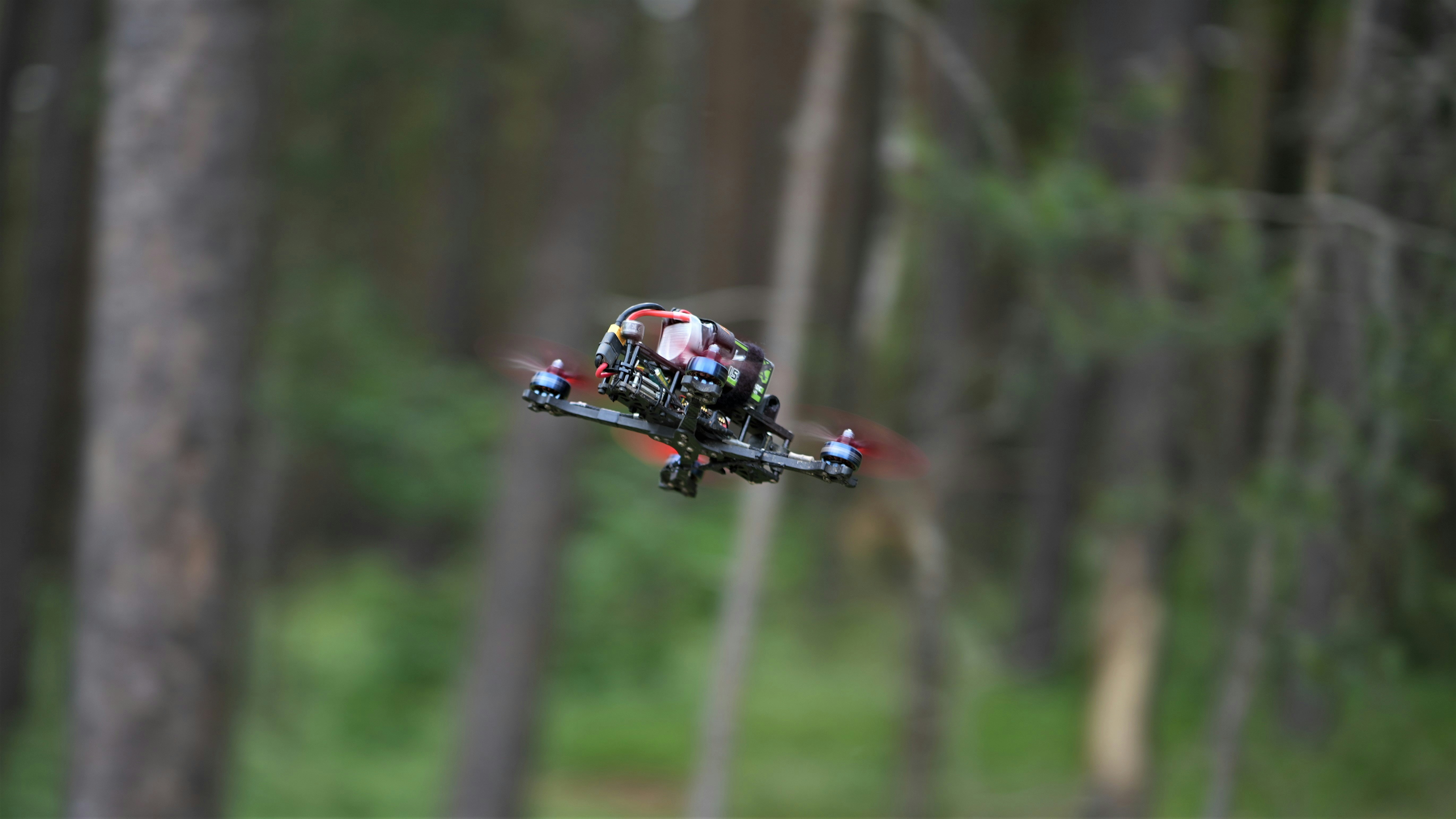
Starting on analog doesn't lock you out of digital later, either. The stick skills you build transfer completely; only the video hardware changes when you eventually upgrade. Analog FPV explained in more depth covers exactly why it's stayed relevant against much newer digital systems.
When Does Digital Make More Sense?
Digital earns its higher price and higher latency when image quality is the actual point of flying, cinematic footage, long-range flights where seeing detail at distance matters, or freestyle flying where a sharp image helps you spot gaps and obstacles earlier. For beginners chasing footage they'll want to keep, that visual clarity is worth the tradeoff from day one.
Is DJI's system worth it for a beginner specifically and Walksnail as a lower-cost digital alternative both go deeper on choosing between digital options once you've decided image quality matters more than latency.
Not every 2026 guide agrees that analog should be the default first purchase, either. One beginner goggle guide argues that if budget allows, a digital system is worth choosing from day one specifically because the clarity difference over analog is dramatic enough to shorten the learning curve, not just improve the footage (ModelRec, 2026). That's a real, defensible counter-argument, not just a budget concession.
Frequently Asked Questions
Neither is universally better. Analog is cheaper and lower-latency, which suits racing, whoops, and tight budgets. Digital gives sharper video for freestyle and cinematic flying at a higher cost and slightly higher latency (UAVMODEL Insights, 2026).
Analog sends an unprocessed video signal with nothing to compress or decode, while digital systems process and compress the feed before display, adding delay even though the image itself is sharper.
Yes. The stick skills and flying technique you build on analog transfer completely; only the video transmitter, camera, and goggles change when you upgrade to a digital system.
It depends on what you're flying for. If capturing shareable footage matters to you from day one, yes. If you're purely building stick skill on a budget, analog gets you there for a fraction of the cost.
Conclusion
Ask yourself why you're flying before asking which system to buy. Racing and tight budgets point to analog. Cinematic footage and long range point to digital. Neither answer is more advanced than the other, they're just solving different problems.
Whichever you land on, FlightDivision's simulator builds the stick skills first, for free, and those transfer completely regardless of which video system eventually sits on your face.
Sources
- UAVMODEL Insights, FPV Goggle Comparison 2026: DJI O4 vs Walksnail vs HDZero vs Analog, Resolution, Latency, and Best Choice by Flying Style, retrieved 2026-08-28, https://blog.uavmodel.com/fpv-goggle-comparison-2026-dji-o4-vs-walksnail-vs-hdzero-vs-analog-resolution-latency-and-best-choice-by-flying-style/
- ModelRec, 12 Best FPV Goggles for Beginners (August 2026), retrieved 2026-08-28, https://modelrec.com/best-fpv-goggles-for-beginners/


