


Key Takeaways
- Durability, not speed, is what makes a tiny whoop a good first drone; the NewBeeDrone Hummingbird V4 stands out specifically for its durable frame and beginner-friendly flight characteristics (Oscar Liang, 2026). - 65mm whoops are lighter and more agile for tight indoor spaces; 75mm models add power and flight time at a small size increase. - A whoop crash costs a few dollars in parts. A 5-inch crash can cost tens of dollars, which matters most in your first weeks of flying.
A tiny whoop's job as a first drone isn't to impress anyone, it's to survive the crash volume a total beginner generates without draining your budget on repairs. That single priority should drive almost every decision on this list.
Why Durability Matters More Than Speed for a First Whoop
Beginners crash frequently by default, and a whoop's small size and enclosed propellers mean a typical crash costs a few dollars in parts instead of tens of dollars on a larger frame. The NewBeeDrone Hummingbird V4 is specifically recommended for newcomers because of its durable frame and slower, more predictable flight characteristics suited to practice (Oscar Liang, 2026).
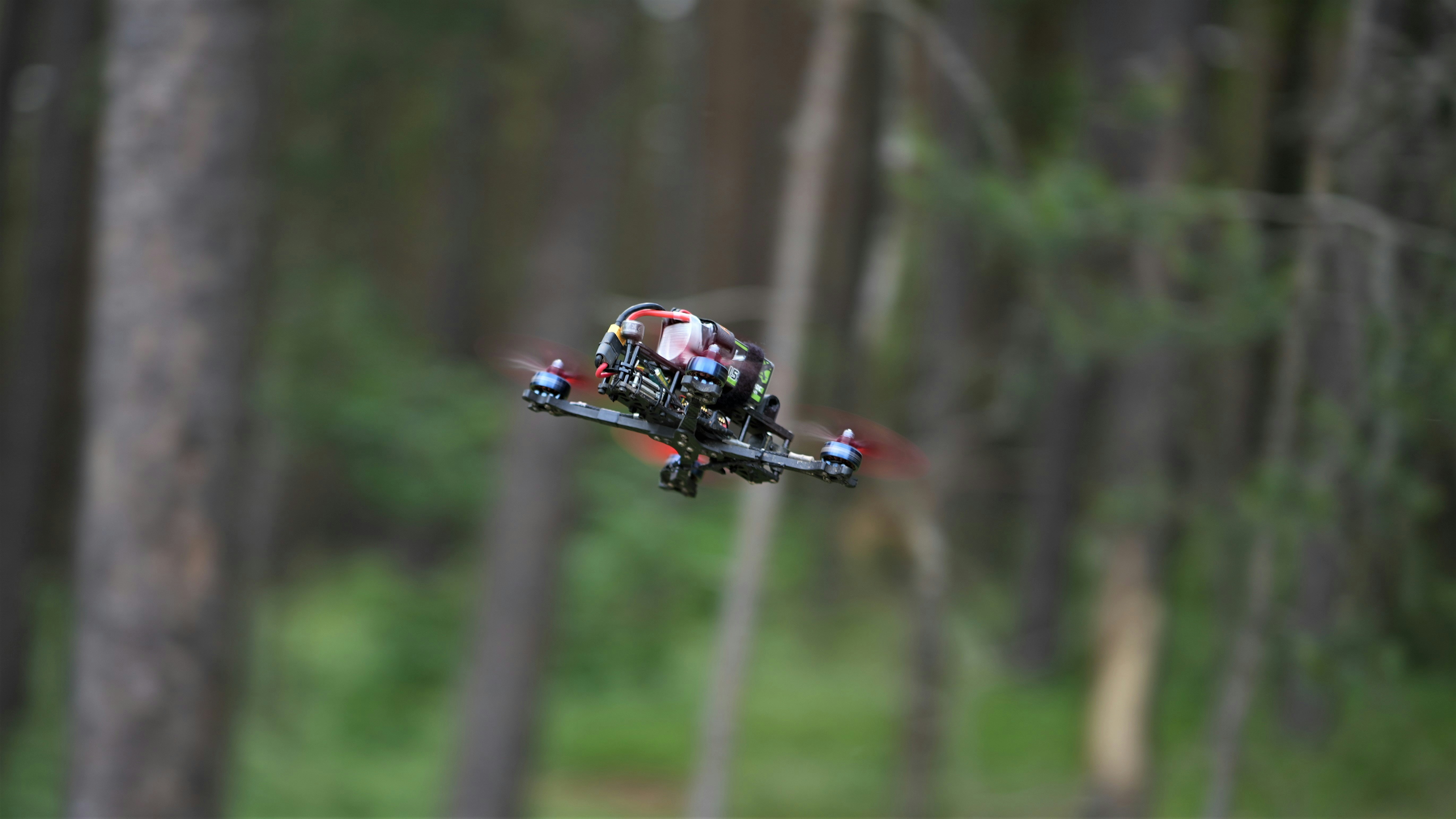
Faster, more aggressive whoops exist and have their place, but they're a poor first choice. A 65mm model built for racing speed, for instance, is explicitly flagged as potentially too aggressive for casual flyers still building fundamentals (Oscar Liang, 2026).
65mm vs. 75mm: Which Size Should You Start On?
65mm whoops, weighing as little as 17.1 grams on models like the BetaFPV Air65, are lighter and more agile in tight indoor spaces, which suits apartment-scale practice (Oscar Liang, 2026). 75mm models, like the BetaFPV Air75 at $95, add a bit more power and flight time at a small size increase, useful once you've outgrown the tightest indoor spaces.
Neither size is wrong to start on. 65mm suits genuinely small spaces; 75mm gives slightly more room to grow before you need to upgrade to an outdoor-capable drone.
What to Look for Beyond Size
A simple 1S battery setup. Most beginner-appropriate whoops run 1S batteries, which keep the whole system lightweight and the charging simple. Our full battery and charger guide covers what to pair with your whoop.
ELRS receiver compatibility. Confirm the whoop pairs with an ExpressLRS radio if you already own one from our radio buying guide, rather than assuming compatibility.
Easy part replacement. Beginner-appropriate whoops use common, cheap replacement parts, motors and frames especially, so a crash is a five-minute fix rather than a wait on a hard-to-find part.
A separate 2026 buyer's guide converges on the same shape of recommendation: a brushless 75mm whoop with ELRS and a well-known flight controller board, stepping down to 65mm only if space is genuinely tight, with parts that are easy to replace weighted above raw speed (Propwashed, 2026). It also makes a point worth repeating here: matching your whoop's flight feel to your simulator's rates and camera angle helps stick skill transfer both directions, not just sim-to-real.
Frequently Asked Questions
Models built for durability and predictable handling over raw speed, like the NewBeeDrone Hummingbird V4, which is specifically recommended for newcomers for its durable frame (Oscar Liang, 2026).
Either works. 65mm suits the tightest indoor spaces and weighs as little as 17 grams; 75mm adds a bit more power and flight time at a small size increase.
No. Whoops built for racing speed are explicitly flagged as too aggressive for casual, beginner flying, since their handling doesn't suit someone still building fundamentals.
Roughly $95 for a 75mm model like the BetaFPV Air75 (Oscar Liang, 2026), with 65mm options available at similar or lower prices.
Conclusion
Speed is the wrong metric for a first whoop. Survivability is the right one. A durable, predictable 65mm or 75mm model with ELRS and easy-to-replace parts teaches you more in a month than a faster whoop you're too nervous to actually fly hard.
Your whoop doesn't need to arrive before you start. FlightDivision's simulator builds the same fundamentals for free, and the full gear guide covers everything else that pairs with it.
Sources
- Oscar Liang, The Best Tiny Whoops and Accessories: Micro Indoor FPV Drones, retrieved 2026-08-28, https://oscarliang.com/best-tiny-whoop/
- Propwashed, Tiny Whoop Buyer's Guide: Best Whoops for Indoor Flying, Sim Practice, and First Builds, retrieved 2026-08-28, https://propwashed.com/tiny-whoop-buyers-guide-best-whoops-for-indoor-flying-sim-practice-and-first-builds/


