


Key Takeaways
- Published guidance ranges from 10 to 50 hours depending on the source: Oscar Liang recommends 10+, Unmanned Tech says 10-20, UAVMODEL Insights gives two different answers (20 hours in one guide, 50 in another). - The disagreement comes down to what "ready" means to each source, not a mistake in anyone's math. A time-boxed reading and a full drill-set-with-zero-crashes reading produce very different numbers. - Hours are a rough proxy. The real signal is whether you can take off deliberately, fly slow controlled lines, turn smoothly, recover from a bad line, and land near a target, checkpoints that map directly onto FlightDivision's course order.
If you've searched "how many hours in a simulator before flying FPV for real," you've probably already found three different answers. That's not a fluke of bad SEO content. Oscar Liang recommends 10+ hours. Unmanned Tech says 10-20. UAVMODEL Insights publishes two separate guides that land on 20 hours in one and 50 in another. All four are legitimate, experienced sources, and none of them are wrong.
The honest answer is that there isn't a single universal number, because "ready" isn't defined the same way twice. This post walks through what each range actually measures, why they diverge, and the skill checkpoints that matter more than any hour count, mapped to concrete course stages you can check off yourself.
What the Published Guidance Actually Says
Four tier-1 to tier-3 FPV sources publish hour recommendations for sim practice before a first real flight, and they range from 10 to 50 hours. None of these numbers is fabricated or an outlier; they're each internally consistent with what that source is measuring.
Oscar Liang's beginner guide recommends "10+ hours" of simulator training, with a floor of "at least 5 to 10 hours before buying or building your first drone" (Oscar Liang, 2026). Unmanned Tech's simulator guide states plainly that "most pilots benefit from 10-20 hours of simulator time" before a first real flight (Unmanned Tech, 2026). UAVMODEL Insights' beginner simulator guide recommends 20 hours, with a specific bar for readiness: you're ready "when you can fly a sim track without crashing for five minutes straight" (UAVMODEL Insights, 2026). A separate UAVMODEL Insights guide comparing Liftoff, VelociDrone, and DRL sets the bar much higher: "50 simulator hours before your first real acro flight," broken into phases from basic hover through freestyle (UAVMODEL Insights, 2026).
Published FPV Simulator Hour Recommendations
Four tier 1-3 sources publish four different numbers, because each is measuring a different definition of 'ready.'
- Oscar Liang: 10+ hours; floor of 5-10 before buying gear; approximately 10
- Unmanned Tech: 10-20 hour range; approximately 20
- UAVMODEL (beginner guide): Ready = 5 clean minutes on a track; approximately 20
- UAVMODEL (Liftoff/VelociDrone/DRL guide): Full phased progression to freestyle-ready; approximately 50
Read literally, that's a five-fold spread between the lowest and highest recommendation. That spread is the actual finding here, not a footnote to skip past.
Why the Numbers Disagree
The four ranges disagree because each source defines "ready" against a different finish line, not because any of them made an error. Read the fine print behind each number and the gap mostly closes.
Oscar Liang's 10-hour floor is explicitly a pre-purchase gate: enough stick time to know you won't wreck a real quad on day one, not full acro fluency. Unmanned Tech's 10-20 range is a general-purpose recommendation aimed at "most pilots," which naturally spans a range rather than naming one number. UAVMODEL's 20-hour guide ties its number to a specific, testable bar (five clean minutes on a track), which is a much lower ceiling than full freestyle competence. Its 50-hour guide is explicit that it's targeting comfort with acro flight through a phased progression that ends in tricks and freestyle, a materially higher standard than "don't crash immediately."
In other words, low numbers measure baseline safety before a purchase. High numbers measure comfort across a broader skill set, including maneuvers a total beginner doesn't need on day one. Neither is padding the truth; they're answering different questions that happen to share the same headline metric.
What Matters More Than Raw Hours
Hours are a rough proxy for skill, and every source that publishes a range also hedges it with the same caveat: quality of practice matters more than time logged. Free-flying without structure and working through an ordered curriculum produce very different results from the same number of hours.
This is also the thesis behind starting in a simulator at all rather than free-flying a real drone from day one. Simulator vs. Real Drone: Why You Should Start in Sim covers the crash-rate case in depth; the short version is that structured, lesson-ordered sim time compounds faster than the same hours spent wandering a map with no plan. Ten deliberate hours working through takeoff, turns, and stopping in order will typically get you further than twenty hours of unstructured hovering and crashing.
That's the gap most published guides skip. They'll tell you "get a simulator" and hand you an hour target, but they rarely specify what those hours should contain. A curriculum that builds one skill at a time, in the order each depends on the last, is what turns hours into transferable skill instead of just screen time.
Readiness Signals to Check Before Your First Real Flight
Rather than watching a clock, check yourself against five concrete signals that published guides converge on regardless of their hour recommendation. If you can do all five reliably in a simulator, the exact hour count you got there in matters far less than the fact that you got there.
- Deliberate takeoff. You lift off cleanly and hold a stable hover without over-correcting the throttle.
- Slow, controlled flight. You can fly a slow line exactly where you intend to go, not just forward at whatever speed feels natural.
- Smooth turns. Your turns blend roll, yaw, and throttle together instead of yawing in place or overshooting the line.
- Recovery from a bad line. When a turn goes wrong or you drift off course, you correct it calmly instead of panicking or overcorrecting into a new mistake.
- Landing near a target. You can bring the drone down close to a chosen spot on purpose, not wherever it happens to end up.
Droneer's guide frames this directly: judge readiness "by control in your own setup, not by a universal hour count," and lists takeoff, slow flight, smooth turns, recovery, and precise landing as the actual bar (Droneer, 2026). Unmanned Tech's own "signs you're ready" checklist echoes the same idea: smooth takeoff and landing, natural orientation, automatic recovery from small mistakes, and precise hover control (Unmanned Tech, 2026).
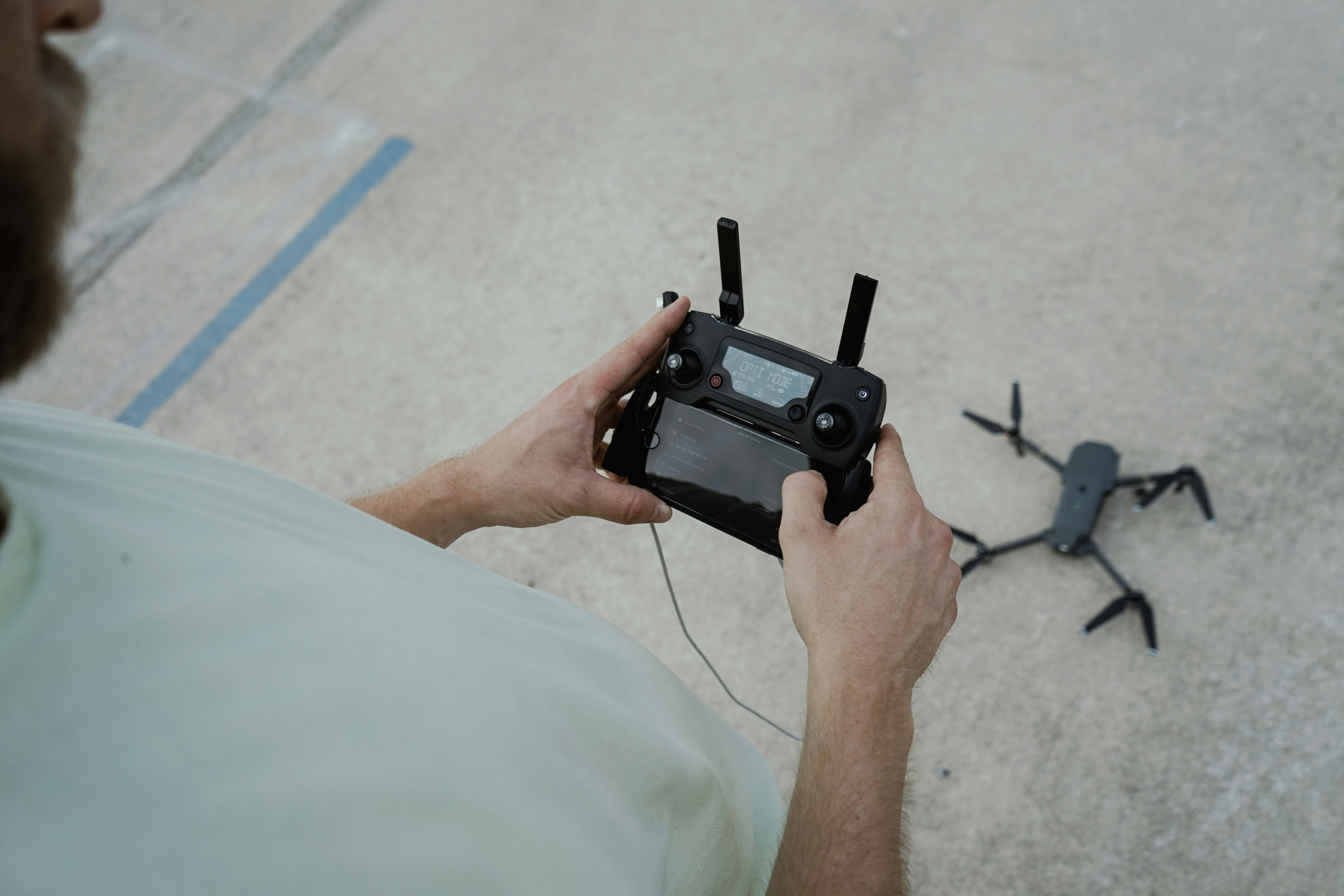
Map Readiness to Course Stages, Not a Raw Hour Count
The most useful way to apply any of this research is to stop tracking a clock and start tracking whether you can clear specific stages of a structured curriculum, since that's what the readiness signals above actually describe in sequence. A raw hour target tells you nothing about whether those hours built the right habits.
FlightDivision's course order runs Takeoff and Forward, then Turns, then Stopping, then Stay Calm, then Basic Tricks, then Flow. That sequence isn't arbitrary; it mirrors the five readiness signals above almost one-to-one. Takeoff and Forward builds the deliberate liftoff and slow controlled flight. Turns builds the smooth blended turning that separates confident flying from yaw-only wobbling. Stopping builds recovery and precise landing near a target, arguably the single most safety-relevant skill on the list. Stay Calm is where crash anxiety gets worked out before it costs you a real drone. Only once those are solid does Basic Tricks make sense to attempt.
If you're not sure whether you've logged "enough" hours, a better question is whether you can clear Stopping cleanly. A pilot who's worked through Takeoff and Forward, Turns, and Stopping in order, however many hours that takes, is in a stronger position for a first real flight than someone who's spent twice as long free-flying and skipping straight to tricks.
You can check your own progress against that sequence directly. Start the Takeoff and Forward course in the FlightDivision simulator, free, in-browser, no hardware required, and work through the stages in order rather than chasing a number.
Frequently Asked Questions
Published guidance ranges from 10 to 50 hours depending on the source and what "ready" means to them (Oscar Liang, 2026; Unmanned Tech, 2026; UAVMODEL Insights, 2026). Most beginner-safety recommendations cluster around 10-20 hours; higher numbers target full acro comfort, not just a safe first flight.
They're measuring different finish lines. Lower numbers (10-20 hours) target baseline safety before a first flight or purchase. Higher numbers (up to 50) target comfort across a broader skill set including tricks and freestyle, a materially higher bar than not crashing immediately.
Yes. Every major source hedges its hour range with the same caveat: structured, ordered practice beats free-flying the same number of hours. A lesson-based curriculum that builds one skill at a time tends to produce real readiness faster than an unstructured hour count.
Deliberate takeoff, slow controlled flight to where you intend, smooth blended turns, calm recovery from a bad line, and landing near a chosen target (Droneer, 2026; Unmanned Tech, 2026). If you can do all five reliably in a simulator, you're closer to ready than any single hour count would suggest.
Conclusion
Published sim-hour guidance spans 10 to 50 hours because sources are answering different questions, not because one of them is right and the rest are wrong. Treat the range as a rough floor, not a target to hit exactly, and check yourself against the actual readiness signals instead: deliberate takeoff, slow controlled flight, smooth turns, recovery from a bad line, and precise landing.
Those five signals map cleanly onto a structured course sequence, and clearing that sequence in order tells you more about your real readiness than any hour count on its own.
Start the Takeoff and Forward course in the FlightDivision simulator. No hardware required.
When the hours are done, What to buy for FPV is the first real cart, still after the sim.
Sources
- Oscar Liang, How To Get Started With FPV Drone, The Ultimate Beginner's Guide, retrieved 2026-08-11, https://oscarliang.com/fpv-drone-guide/
- Unmanned Tech, FPV Simulator Guide: Practice Before You Fly (2026), retrieved 2026-08-11, https://www.unmannedtechshop.co.uk/blogs/knowledge-base/fpv-simulator-guide-practice-before-you-fly
- UAVMODEL Insights, Beginner Guide to FPV Simulators: Training Before Your First Flight, retrieved 2026-08-11, https://blog.uavmodel.com/beginner-guide-to-fpv-simulators-training-before-your-first-flight/
- UAVMODEL Insights, FPV Simulator Training Guide: Liftoff, Velocidrone, and DRL Comparison for 2026, retrieved 2026-08-11, https://blog.uavmodel.com/fpv-simulator-training-guide-liftoff-velocidrone-and-drl-comparison-for-2026/
- Droneer, How to Practice FPV in a Simulator Before Your First Real Flight, retrieved 2026-08-11, https://droneer.com/fpv-guides/how-to-practice-fpv-in-a-simulator-before-your-first-real-flight/


