


Key Takeaways
- A simulator crash costs nothing; a real crash routinely runs $20-60 in parts even for a "minor" one, and can hit $200+ if a battery or ESC goes with it (UAVMODEL Insights, 2026).
- Stick coordination, spatial awareness, and trick timing transfer from sim to real flight. Exact weight, inertia, and wind feel don't (UAVMODEL Insights, 2026; Unmanned Tech, 2026).
- Ordered, lesson-based sim practice beats the same number of hours spent free-flying, because deliberate practice research shows structured skill-building consistently outperforms routine repetition.
Ask UAVMODEL Insights or Unmanned Tech whether you should learn FPV in a simulator first, and you'll get the same answer: yes, obviously. Both run essentially the same comparison, and both land on "sim first, real hardware later." That answer is correct but incomplete. It skips the part that actually determines whether your sim hours turn into real skill: what you practice, and in what order.
This post covers the comparison itself, cost, safety, what transfers and what doesn't, but its real argument is narrower and less commonly made. Free-flying in a simulator for 15 hours is not the same as spending 15 hours moving through a curriculum. The structure is where the compounding happens, not the hour count alone.
Cost: Free Practice vs. Real Repair Bills
A simulator crash costs a few seconds to reset. A real drone crash routinely costs $20-60 in replacement parts, and can climb past $200 if a battery or electronics stack fails on impact. That gap alone changes how freely a beginner is willing to experiment.
Common individual repair costs after a crash include props at roughly $0.75 each, frame arms at $5-15, motor bells at $15-25, full motor swaps at $15-40, and a fried ESC or replacement flight stack at $20-60 (UAVMODEL Insights, 2026). A puffed or damaged LiPo battery adds another $25-40, and that's before accounting for a cracked camera lens or a torn VTX connector. None of these are catastrophic on their own, but they add up fast for a beginner who's still crashing every few flights.
The real risk isn't any single repair. It's skipping a post-crash inspection and flying again on hidden damage, which is how "a $20 repair turns into a $200 fire," in UAVMODEL's own framing (UAVMODEL Insights, 2026). A simulator has no equivalent failure mode. You crash, you respawn, and the only thing you've spent is a few seconds.
That cost gap changes behavior, not just budgets. A pilot who's afraid of a $40 repair flies conservatively, avoids the maneuvers that would actually teach them something, and plateaus. A pilot in a simulator has no reason to hold back, so they attempt the harder line, fail, and learn what caused the failure immediately.
Safety and Consequence-Free Iteration
In a simulator, you can crash a hundred times in a session and the only thing you lose is virtual battery (Unmanned Tech, 2026). That's not a minor convenience. It's what makes rapid, high-repetition iteration possible in the first place.
Real flying can't offer that without real cost, and it shouldn't try to. Every crash on real hardware carries some chance of a broken part, a damaged prop, or worse, an unsafe flying area. Beginners who train exclusively on real drones tend to fly cautiously around the exact maneuvers, sharp turns, tight gates, aggressive dives, that would build their skill fastest, because the downside of getting it wrong is expensive and sometimes dangerous.
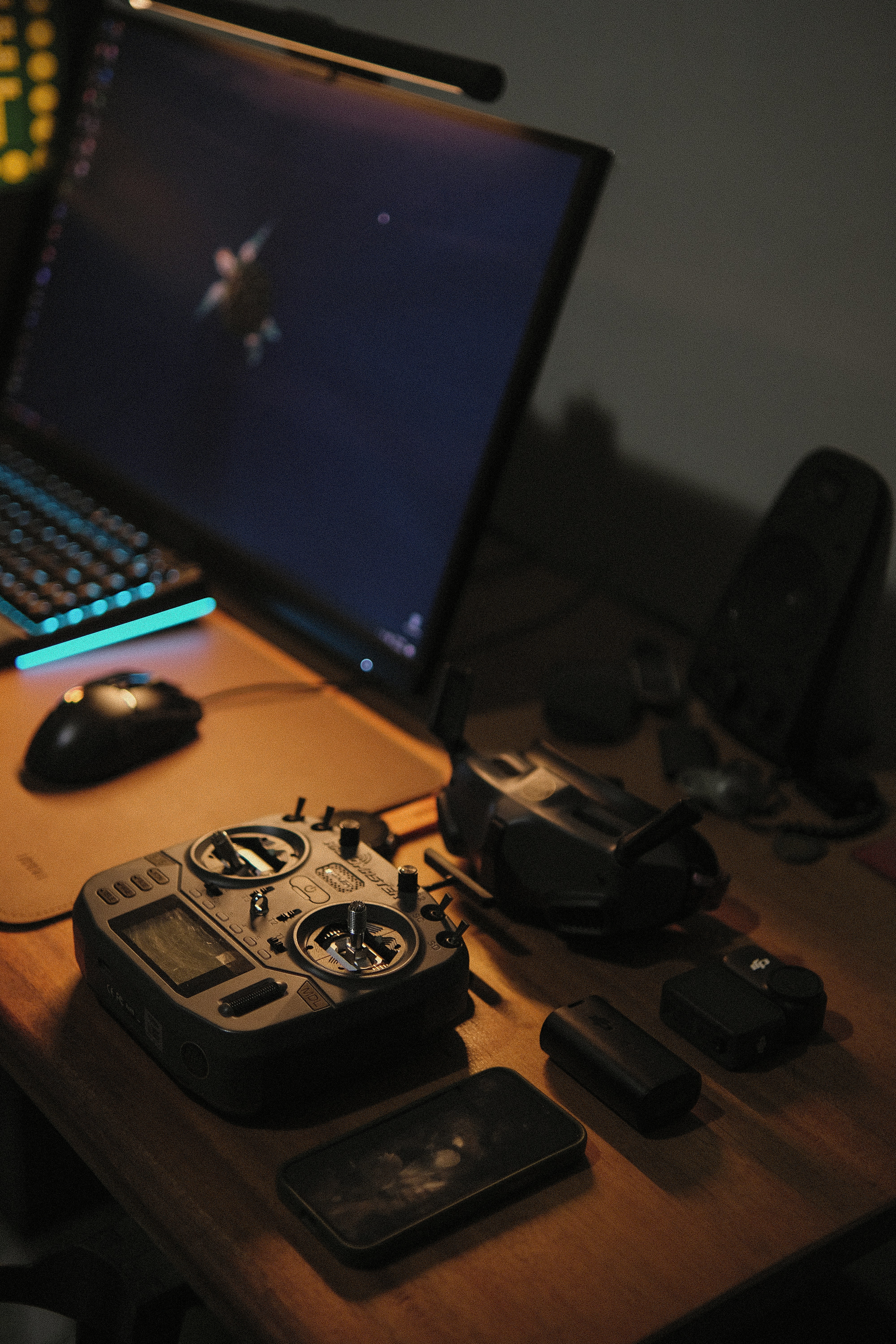
This is where the pillar's crash-rate figure matters: in 2026, one FPV training analysis found that pilots with 10+ hours of simulator practice crashed roughly 2 times in their first 10 real flights, compared to roughly 20 crashes for pilots with no sim training at all (UAVMODEL Insights, 2026). That tenfold gap isn't about talent. It's the direct result of building stick skills somewhere crashing is free, before ever putting a real airframe at risk.
What Actually Transfers From Sim to Real Flight
Stick coordination, spatial awareness, and trick timing carry over cleanly from simulator practice to real flying, because they're motor skills built through repetition regardless of what's generating the visual feedback. What doesn't transfer as cleanly is the exact feel of a real airframe's weight, inertia, and how wind and turbulence push it around mid-flight.
Unmanned Tech's own breakdown lists orientation control, throttle management, thumb-and-eye coordination, and emergency reflexes as the specific skills a simulator builds well (Unmanned Tech, 2026). Those are exactly the fundamentals that make a first real flight survivable instead of a coin flip.
On the other side, the same source is direct about the gap: simulators don't build spatial awareness in true 3D space, real-world physics and wind effects, stress management under actual pressure, or the psychological weight of real consequences for a mistake (Unmanned Tech, 2026). A simulator is an approximation of the physics, not a perfect copy, and the gap widens on the most aggressive maneuvers, where a sim has nothing at stake and real flying suddenly does.
That's not an argument against simulator training. It's the argument for treating it as the first phase of a two-phase process, not a replacement for phase two.
| FPV Simulator | Real Drone | |
|---|---|---|
| Cost per crash | $0 | $20-60 typical, $200+ on bad luck |
| Iteration speed | Unlimited resets, no downtime | Limited by repairs, batteries, travel to a field |
| Stick coordination, orientation, throttle feel | Builds effectively | Builds effectively, but slower and riskier early on |
| Real weight, inertia, wind feel | Approximated only | Full fidelity |
| Consequence and pressure | None | Real, which is itself a skill to build |
| Where to build the foundation | Here, first | After sim fundamentals are solid |
Why Ordered Practice Beats Free-Flying
The skill most FPV guides skip past: sim time only compounds into real ability when it follows a sequence, the same way flight instructors move students through a syllabus instead of letting them free-practice whatever feels fun that day. This is where structured curricula pull ahead of open-ended sim sessions logging the same number of hours.
Deliberate practice research backs this up outside of FPV entirely. Unstructured practice tends to reinforce whatever habits a person already has, good or bad, while deliberate, structured practice systematically targets specific weaknesses and rebuilds them with feedback built in (ScienceDirect, Deliberate Practice, 2026). Aviation training researchers make the same point about pilots: most of what looks like "practice" in an unstructured setting is actually just performance under pressure, repeating the same habits rather than correcting them (10x Flight Training, 2026).
Free-flying in a simulator without a plan still teaches something. But it teaches whatever you happen to attempt, in whatever order you happen to attempt it, with no guarantee the skill you need next is the skill you're actually practicing. A pilot who jumps straight to gates before they can reliably stop hasn't built the control that keeps them safe. They've just relocated the moment their weakness shows up from the sim to the field.
This is exactly why FlightDivision's own lesson curriculum is ordered rather than open: Takeoff and Forward, then Turns, then Stopping, then Stay Calm, then Basic Tricks, then Flow. Each stage assumes the one before it is solid. Stopping comes before Basic Tricks on purpose, because a pilot who can't stop reliably yet is going to relearn that gap the hard way, mid-trick, instead of in a controlled lesson built specifically to teach it. Structured, lesson-ordered sim time is what turns "I flew a simulator for 15 hours" into "I can actually fly," and it's the reason FlightDivision built lessons into the sim itself instead of shipping a free-fly sandbox and calling it training.
When to Move to Real Hardware
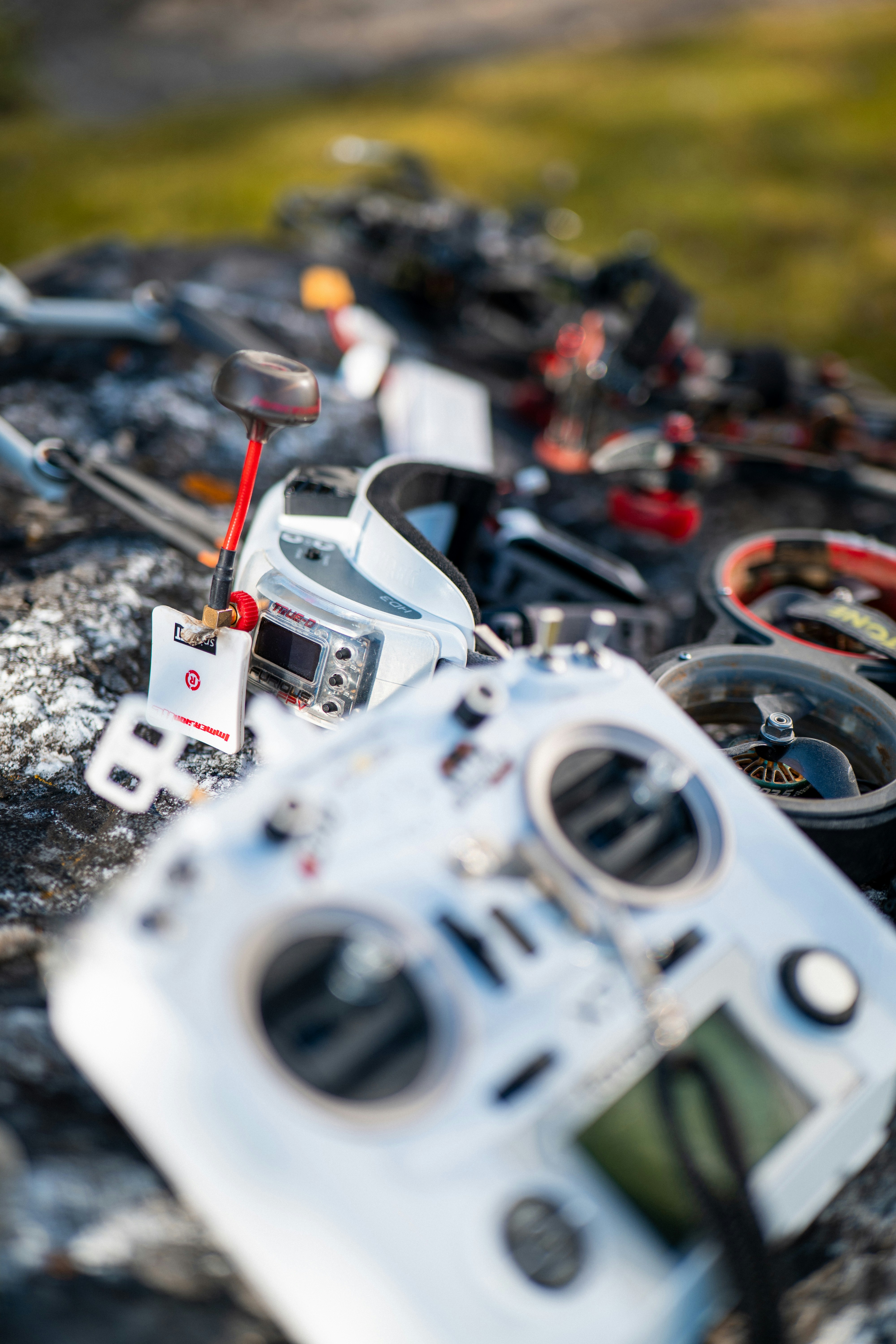
Move to real hardware once you can reliably take off, fly a controlled pattern, turn without losing altitude, and stop, not the moment you feel bored with the simulator. That checkpoint matters more than any specific hour count, because two pilots with the same logged hours can be at very different points in their actual skill progression.
Before you buy anything, it helps to know what you're actually buying: flight controller, ESC, motors, receiver, and how they fit together. FPV Drone Parts Explained walks through each component so your first hardware purchase is an informed one rather than a guess. You don't need to own any of it yet to keep progressing.
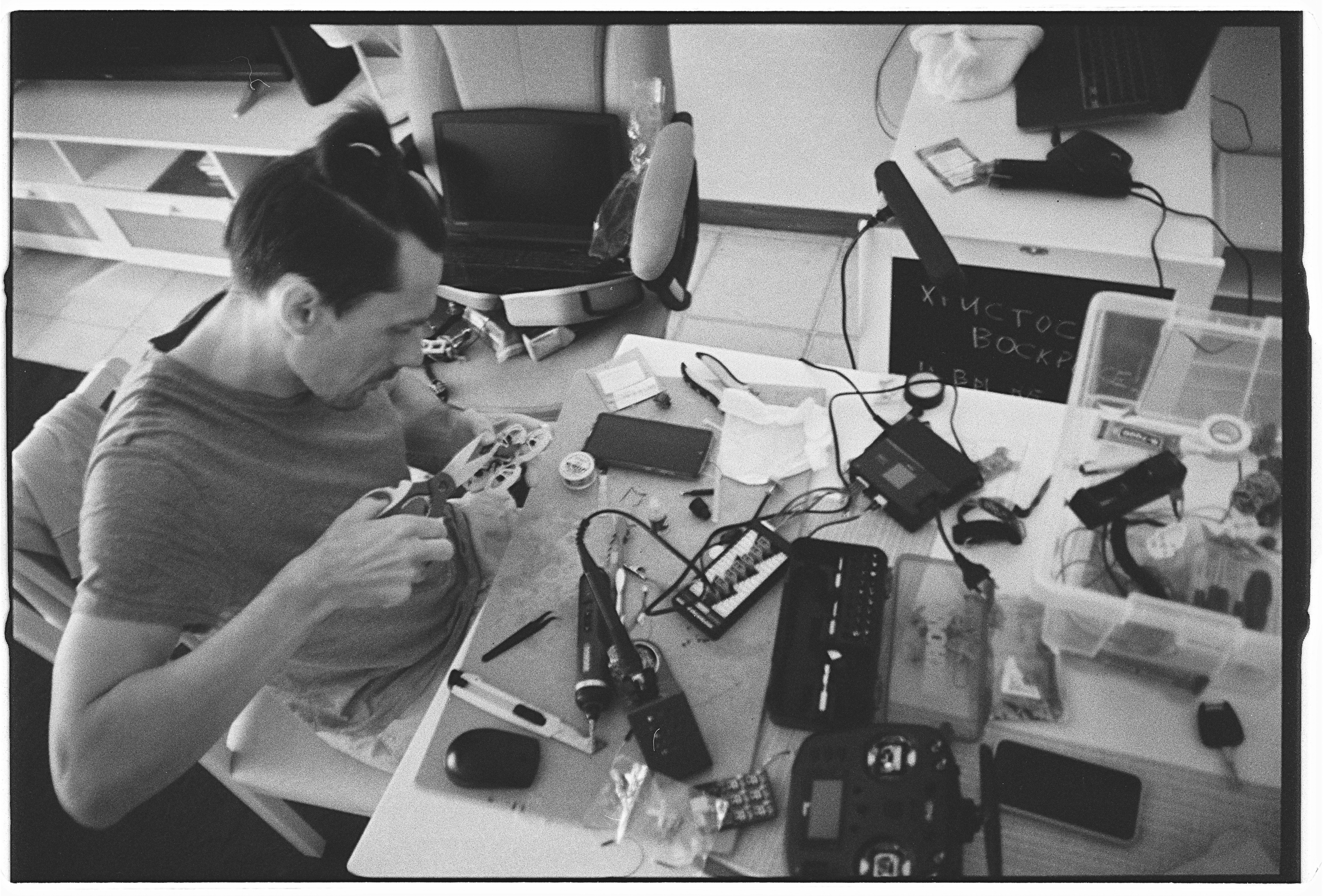
Repair costs and crash counts drop off fast once the fundamentals are solid, which is the entire point of doing the work in sim first. The complete beginner's guide covers the full picture of what FPV involves if you're starting from zero.
Getting Started
You don't need a drone, goggles, or a radio to start building real FPV skill today. Everything covered in this comparison, stick coordination, orientation, throttle feel, timing, builds inside a browser with nothing to buy and nothing to break.
Fly your first lesson in the FlightDivision simulator (/sim). No hardware required, free, in-browser, and ordered from Takeoff and Forward through Flow so every hour you spend actually builds on the last one.
When those hours are in, What to buy for FPV is the cart: radio, goggles, whoop, batteries, charger.
Frequently Asked Questions
For the foundational stick skills, coordination, orientation, throttle control, timing, yes. For the exact feel of a real airframe's weight and inertia, and for flying under real stress, no. Sim training is best treated as phase one, not a full replacement for real flight.
A simulator costs nothing per crash. A real drone crash typically runs $20-60 in parts, props, motors, or an ESC, and can exceed $200 if a battery or flight stack is damaged (UAVMODEL Insights, 2026). Beginners who skip sim training tend to hit those costs far more often.
No. Free-flying without a plan reinforces whatever you happen to practice, in whatever order, with no guarantee it's the skill you need next. Deliberate practice research shows structured, ordered training consistently outperforms unstructured repetition at the same time investment.
The exact feel of a real drone's weight and inertia, real wind and turbulence effects, and the psychological pressure of genuine consequences for a mistake. Simulators approximate physics well but aren't a perfect substitute for these (Unmanned Tech, 2026).
Sources
- UAVMODEL Insights, FPV Simulator Training: Liftoff vs Velocidrone vs Uncrashed, Which Actually Translates to Real Flying, 2026 Guide, retrieved 2026-08-11, https://blog.uavmodel.com/fpv-simulator-training-liftoff-vs-velocidrone-vs-uncrashed-which-actually-translates-to-real-flying-2026-guide/
- UAVMODEL Insights, FPV Drone Crash Recovery: Post-Crash Inspection and Repair Guide, retrieved 2026-08-11, https://blog.uavmodel.com/fpv-drone-crash-recovery-post-crash-inspection-and-repair-guide/
- Unmanned Tech, FPV Simulator Guide: Practice Before You Fly (2026), retrieved 2026-08-11, https://www.unmannedtechshop.co.uk/blogs/knowledge-base/fpv-simulator-guide-practice-before-you-fly
- 10x Flight Training, The Right Stuff, retrieved 2026-08-11, https://10xflight.com/the-right-stuff
- ScienceDirect, Deliberate Practice (topic overview), retrieved 2026-08-11, https://www.sciencedirect.com/topics/psychology/deliberate-practice


