


Key Takeaways
- FPV feels hard because of three stacked factors, not one: four simultaneous inputs, zero auto-stabilization, and real financial stakes on every mistake. Remove the financial stakes and the rest is a normal motor-skill curve. - Beginner estimates converge on roughly 20 hours to fly acro comfortably and around 200 hours to fly it well (Level One Drone, 2026), similar in scale to picking up a new instrument or sport. - Structured, ordered practice consistently outperforms the same hours spent free-flying without a curriculum (Chen et al., Frontiers in Public Health, 2024).
Yes, and no. FPV drone flying is genuinely hard if you buy hardware first and figure it out by crashing it. It's a normal, learnable motor skill if you strip out the parts that make it feel impossible before you've even taken off. Those are two different questions wearing the same headline, and most "is FPV hard" content answers neither one directly.
The honest version of that answer isn't another paragraph of hedging. It's that you can find out for yourself, for free, in about the time it takes to read this article. That's not a dodge — it's the actual fastest path to a real answer, and it's worth understanding why before you try it.
What Makes FPV Feel Hard From the Outside
FPV looks hard because three separate difficulties stack on top of each other at once: four simultaneous stick inputs, zero auto-stabilization to catch mistakes, and real money riding on every crash. Isolate any one of those and it's manageable. Stacked together, they read as "impossible" to a beginner who hasn't flown anything yet.
The first factor is mechanical. Acro mode blends throttle, pitch, roll, and yaw with no auto-leveling, so all four inputs have to move together in coordination the entire time you're airborne (Drone Racing League, FPV 101: Phase 1, Episode 7, 2026). That's more simultaneous coordination than most first-time hobbies ask for, and it's the piece our controls breakdown covers stick by stick.
The second factor is the missing safety net. A camera drone holds position and avoids obstacles on its own. An acro FPV quad does neither: it keeps moving in whatever direction you last commanded until you actively correct it (Unmanned Tech, 2026). There's no computer quietly preventing your worst inputs from becoming a crash.
The third factor is the one competitors barely mention: financial stakes change how you fly, not just how you feel about flying. A drone that costs real money to repair introduces hesitation into your stick inputs before you've consciously decided to hesitate. Hesitant, over-corrected sticks look exactly like a lack of skill, even when the underlying coordination is fine.
What's Actually Hard Once You Strip Those Away
Once you remove financial risk from the equation, what's left is an ordinary motor-skill learning curve, comparable in shape and timeline to picking up a new instrument or racket sport, not a fundamentally different category of difficulty. That reframe matters because it changes what "hard" is actually describing.
Nobody expects to sight-read sheet music the first week of piano lessons, and nobody expects to serve accurately the first day they pick up a racket. Motor skills of that kind take repetition to encode, and the encoding happens whether the stakes are real or simulated. Research on musical training bears this out: complex motor skills built through an instrument take sustained practice over weeks and months to consolidate, with sleep and repetition both playing a measurable role in retention (Goldsmiths, University of London, 2024). FPV's stick coordination follows the same underlying mechanism. It's a skill built through repeated attempts, not a talent you either have or don't.
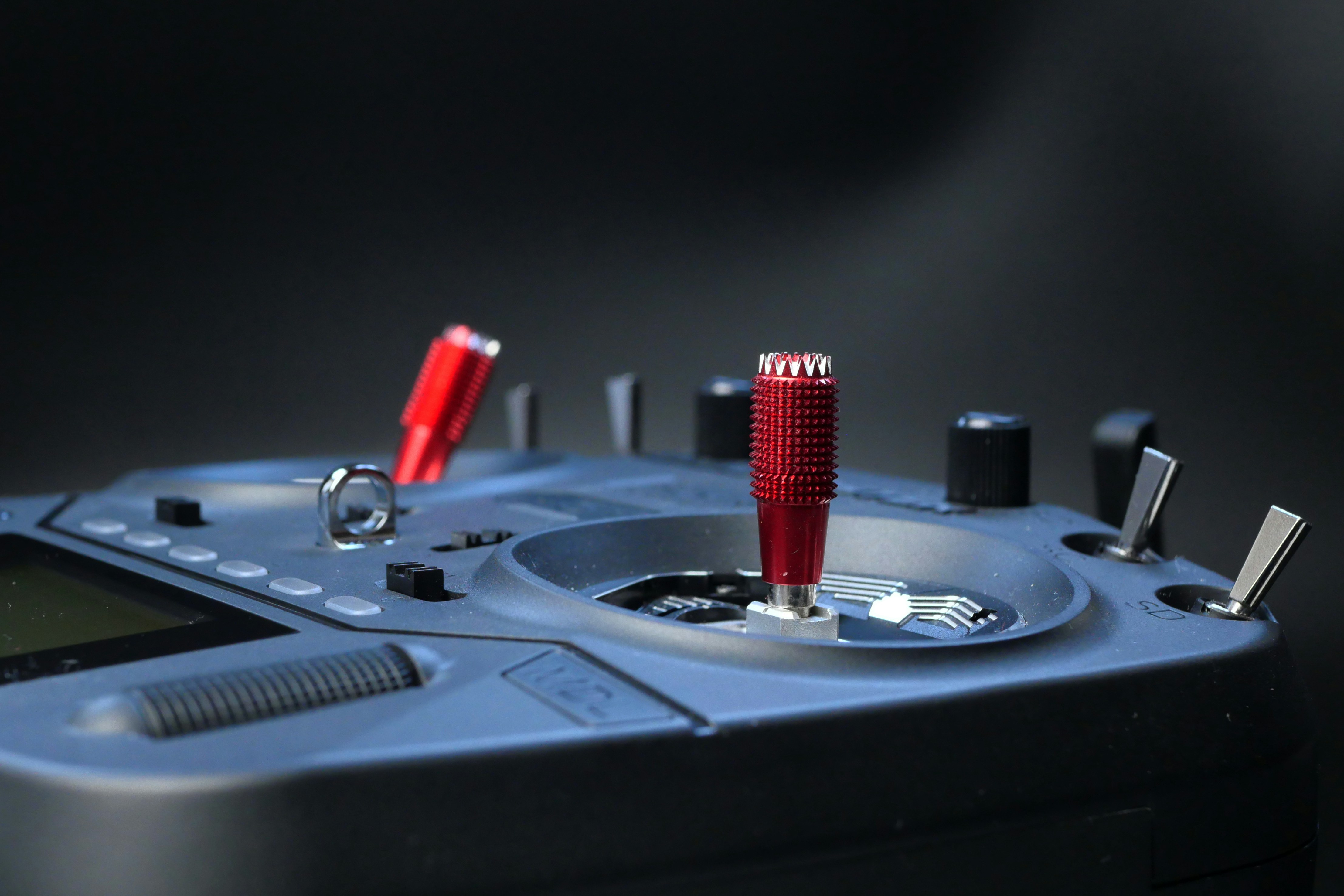
What separates FPV from an instrument isn't the learning mechanism, it's the cost of a bad rep. A wrong piano chord costs nothing. A wrong FPV input, on real hardware, can cost a frame or a set of props. That's the entire reason starting in a simulator instead of on real hardware matters here in a way it wouldn't for piano: it lets you take the bad reps that build the skill without the cost that makes beginners hesitate in the first place.
Why Structured Practice Flattens the Curve
Structured, ordered practice consistently produces better motor-skill outcomes than the same number of hours spent practicing without a plan, and FPV is no exception. This isn't a hobbyist opinion, it shows up in the broader motor-learning research base, and it's the mechanism behind why some pilots plateau for months while others progress steadily on similar practice volume.
A 2024 meta-analysis in Frontiers in Public Health comparing structured and unstructured motor-skill interventions found structured practice produced significantly better locomotor-skill outcomes than unstructured practice (Hedges' g = 0.44, p = 0.04), and concluded that well-designed structured interventions are generally more effective than undirected practice at building fundamental motor skills (Chen et al., Frontiers in Public Health, 2024). That finding comes from motor-skill research broadly, not FPV specifically, but the mechanism it describes, that ordered skill-building beats random repetition, is exactly what separates a beginner who plateaus from one who doesn't.
Free-flying in a simulator without a sequence teaches some good habits and cements just as many bad ones, because nothing forces you to fix a weak input before it becomes load-bearing for the next skill. A pilot who never nails a controlled stop but keeps flying anyway just relocates that gap into every maneuver built on top of it. Order isn't a nice-to-have here, it's the difference between compounding progress and repeating the same plateau.
This is the exact mechanism behind FlightDivision's own curriculum. Structured, ordered lessons, Takeoff and Forward, then Turns, then Stopping, then Stay Calm, then Basic Tricks, then Flow, exist because each skill depends on the one before it holding up. Fly your first lesson in the FlightDivision simulator, free, no hardware required, and see for yourself whether the mechanical coordination is the hard part, or whether it was the missing structure and the crash stakes all along.
How Long Does It Actually Take?
There's no single honest number, but the ranges published across beginner guides cluster tightly enough to be useful: roughly 10 to 20 hours of focused practice to fly acro comfortably, and up to 200 hours to fly it well across gates, tricks, and tighter lines. The width of that range is itself informative, not a hedge.
The lower bound tracks with sim-training guidance already established elsewhere in this cluster: 10 to 20 hours of simulator practice before a beginner's first real Acro flight is a commonly cited threshold across independent sources (UAVMODEL Insights, 2026; Oscar Liang, 2026). One hobbyist breakdown puts basic comfortable control at around 20 hours of total practice, and puts genuinely proficient flying, gates, races, clean freestyle lines, closer to 200 hours (Level One Drone, 2026). Both numbers describe real skill checkpoints, not arbitrary milestones: comfortable acro control at the low end, competitive polish at the high end.
What moves a pilot faster through that range isn't raw talent, it's whether the hours are structured. A pilot working through an ordered lesson sequence, one skill proven before the next is introduced, tends to reach the 10 to 20 hour comfortable-control checkpoint faster than a pilot logging the same hours free-flying without a plan, because free-flying doesn't force weak fundamentals to get fixed before they compound. The hour count is the same either way. What you get for those hours isn't.
Frequently Asked Questions
It's hard if you skip structure: jump straight to real hardware with no sim time and no lesson order. Trained with a simulator and a curriculum, it becomes a normal motor-skill curve comparable to learning an instrument or a racket sport, not a fundamentally harder category of skill.
Beginner estimates converge on roughly 10 to 20 hours of focused practice to fly acro comfortably, with up to 200 hours to reach genuinely proficient flying across gates and tricks (Level One Drone, 2026). Structured practice reaches those checkpoints faster than the same hours spent unstructured.
Three factors stack together: four simultaneous stick inputs with no auto-stabilization to catch mistakes, and real financial stakes on every crash once you're on real hardware. Remove the financial stakes with a simulator and what's left is an ordinary motor-skill learning curve.
Yes. A free, browser-based simulator lets you test the actual learning curve, four-input coordination, no auto-leveling, before spending anything on gear. It's the fastest, lowest-stakes way to answer "is this hard for me" with real evidence instead of a guess.
Conclusion
FPV isn't uniquely, mysteriously hard. It's hard the way any new motor skill is hard until repetition builds the coordination, plus one extra variable most hobbies don't have: real financial stakes that turn ordinary beginner mistakes into hesitant, over-corrected flying. Strip the stakes out with a simulator, add a structured lesson order instead of free-flying blind, and the "impossible" reputation mostly evaporates.
You don't need to take a stranger's word for any of this, including ours. The fastest way to find out whether FPV is hard for you is to try the actual coordination task, for free, with nothing to lose if the first few attempts go badly. That's the honest answer to "is FPV hard to learn": try it before you decide, because the only expensive part of finding out was ever the hardware, and a simulator removes exactly that.
Fly your first lesson in the FlightDivision simulator. No hardware required, free, in-browser.
Sources
- Level One Drone, How Long Does It Take to Learn How to Fly a FPV Drone?, retrieved 2026-08-11, https://levelonedrone.com/fpv-questions/how-long-does-it-take-to-learn-how-to-fly-a-fpv-drone/
- NoirFPV, Are FPV Drones Hard to Fly? Beginners Should Know THIS, retrieved 2026-08-11, https://noirfpv.com/are-fpv-drones-hard-to-fly/
- UAVMODEL Insights, Beginner Guide to FPV Simulators: Training Before Your First Flight, retrieved 2026-08-11, https://blog.uavmodel.com/beginner-guide-to-fpv-simulators-training-before-your-first-flight/
- Oscar Liang, How To Get Started With FPV Drone, The Ultimate Beginner's Guide, retrieved 2026-08-11, https://oscarliang.com/fpv-drone-guide/
- Drone Racing League, FPV drone controls explained, throttle, pitch, roll, yaw (FPV 101: Phase 1, Episode 7), retrieved 2026-08-11, https://www.youtube.com/watch?v=cXCXRbkWiio
- Unmanned Tech, FPV Flight Modes: Angle vs Horizon vs Acro vs Acro Trainer, retrieved 2026-08-11, https://www.unmannedtechshop.co.uk/blogs/knowledge-base/fpv-drone-flight-modes-explained-angle-horizon-acro
- Chen, D., Zhao, G., Fu, J., et al., Effects of structured and unstructured interventions on fundamental motor skills in preschool children: a meta-analysis, Frontiers in Public Health, retrieved 2026-08-11, https://pmc.ncbi.nlm.nih.gov/articles/PMC11242925/
- Goldsmiths, University of London, Music lessons are associated with improved motor and reasoning skills, research suggests, retrieved 2026-08-11, https://www.gold.ac.uk/news/music-lessons-motor-reasoning-skills/


