


Key Takeaways
- Most new FPV pilots don't quit because the skill is unusually hard. They quit for the same reason new players abandon games with no tutorial: confusion, not difficulty, kills early progress (Game Wisdom, 2026).
- Game and gamification research is consistent on the fix: scaffold information gradually, one skill at a time, so success is likely at every step before the next one unlocks (Yu-kai Chou, 2026).
- Most FPV simulators ship as open free-fly sandboxes with no built-in lesson path; a few have partial structure, but almost none carry a beginner all the way from first hover to tricks in order (Oscar Liang, 2026; UAVMODEL Insights, 2026).
- FlightDivision's course order, Takeoff and Forward, then Turns, then Stopping, then Stay Calm, then Basic Tricks, then Flow, is a concrete example of the video-game-style progression this post argues for.
Ask someone who quit FPV within their first week why they stopped, and "it was too hard" is rarely the real answer. The more honest answer is usually something closer to "I didn't know what to do next." Those are different problems with different fixes, and most FPV onboarding, in sim and in the hobby generally, is built to fix the wrong one.
FPV flight is a real motor skill and it does take repetition to build. But the reason most beginners bounce off it isn't that the skill is unusually punishing. It's that they're handed a fully open simulator, a free-fly sandbox with no lesson path, no sense of what to practice first, and no signal for when they've actually gotten better. That's the exact failure mode game designers have studied for years in a completely different context: video games with no tutorial or level structure. This post argues that the easiest way to learn FPV from scratch is the same fix that works there, a gamified, ordered curriculum where one skill visibly unlocks the next, and it uses FlightDivision's own course order as the working example.
Why Beginners Actually Quit: It's Not Difficulty, It's Direction
Game designer Josh Bycer, who writes for Game Wisdom, puts a number on how fast this happens in games generally: "most people will quit a game within the first ten minutes of starting it up," and that window lines up almost exactly with the tutorial and opening area (Game Wisdom, 2026). His diagnosis of why is the part that matters for FPV: it's not that the opening minutes are too hard, it's that "a breakdown in logic is often the quit point for people when they realize that they don't know what they're doing." Confusion ends sessions. Difficulty, on its own, usually doesn't.
That maps onto FPV almost exactly. A total beginner who opens a free-fly simulator for the first time faces an open map, full stick authority, and zero guidance about what to try first. There's no failure state telling them they did something wrong, and no success state telling them they did something right. They can hover badly, drift into the ground, and never learn whether that's expected at this stage or a sign they're doing something fundamentally off. That ambiguity, not the actual physical difficulty of moving two thumbsticks, is what makes people close the tab.
What Game and Gamification Research Says About Fixing This
The fix game designers converge on is scaffolding: break the experience into small, ordered steps where each one is winnable before the next one is introduced. Gamification researcher Yu-kai Chou describes the stretch after onboarding as "the regular, repeating journey where sustained engagement is built or lost," and argues that ordered milestones are what keep people moving forward instead of drifting away (Yu-kai Chou, 2026). His example is almost literally a lesson curriculum: "whenever you level up, your character will learn a new awesome skill. How can you quit before you try out this awesome skill?" The unlock itself is the motivator, but it only works because the previous level made that skill earnable and visible.
This isn't unique to entertainment games. Deliberate practice research outside of gaming makes the same structural argument: unstructured practice tends to reinforce whatever habits a person already has, while structured practice targets specific weaknesses in order, with feedback built into each step (ScienceDirect, Deliberate Practice, 2026). Skill acquisition research on motor learning specifically backs the same conclusion, that breaking a complex movement into smaller, ordered components with immediate feedback outperforms open-ended repetition. Two different research traditions, game design and motor-skill acquisition, land on the same answer: order and feedback beat unstructured volume.
None of this says FPV is easy. Stick coordination under time pressure is a genuine motor skill and it takes real repetition to build. What the research says is narrower and more useful: the skill develops fastest when it's broken into an ordered sequence with clear checkpoints, not when it's left as an open field for a beginner to wander.
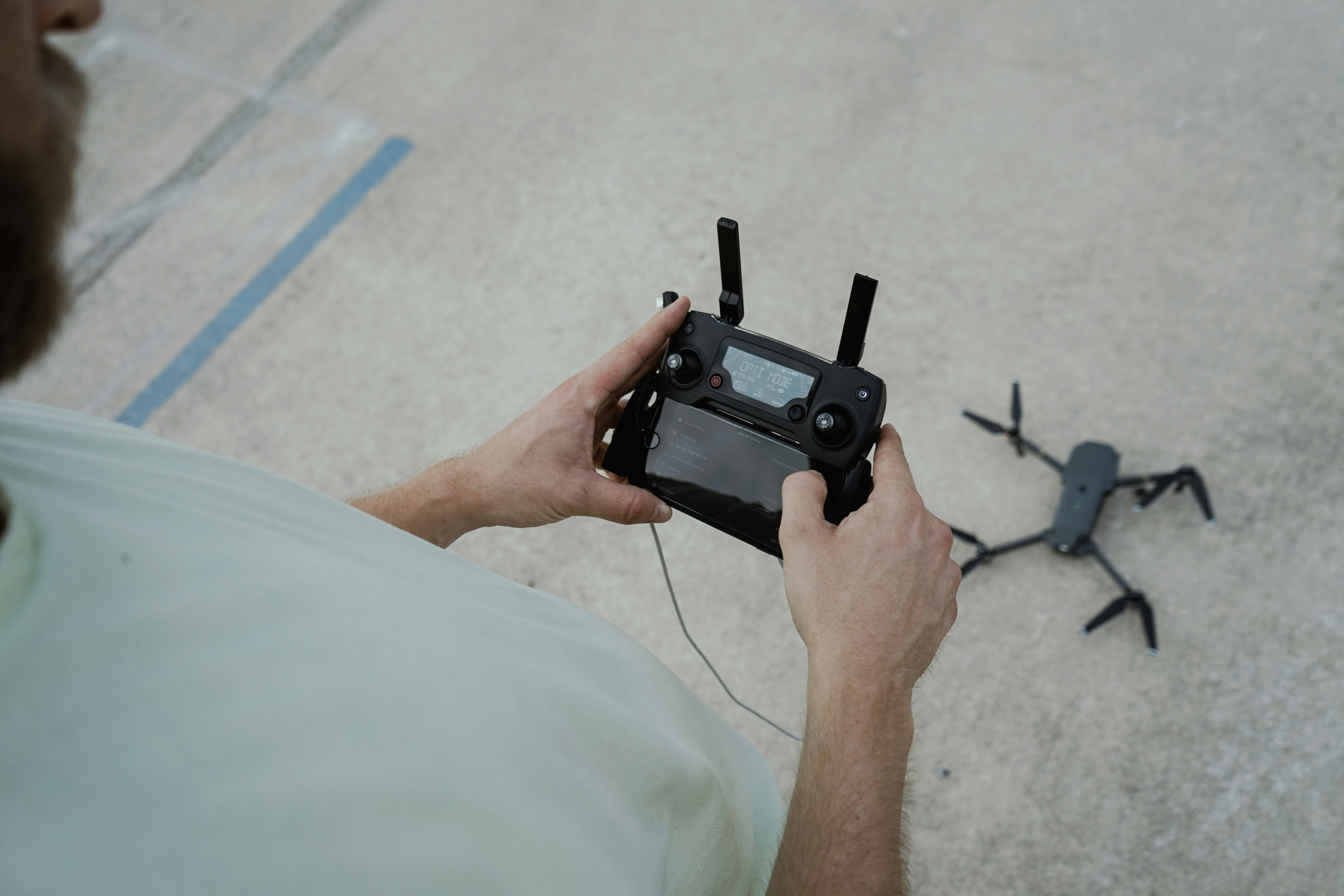
How Most FPV Simulators Actually Onboard Beginners
Most FPV simulators are, at their core, free-fly sandboxes. You load in, you have a drone and a map, and what you do with it is entirely up to you. Some have added structure on top of that, but it's worth being specific about how much, because "structured" means very different things across the field.
Oscar Liang's own simulator round-up singles out DRL Simulator's training program as the standout, calling it "structured" and noting it "carefully guides you from basic flying techniques to advanced maneuvers" (Oscar Liang, 2026). Liftoff gets similar credit for an "updated training program" that provides "an excellent structured learning path for complete beginners." VelociDrone, by contrast, is praised for realistic physics rather than any built-in teaching path, which leaves skill-building to the pilot's own initiative.
A separate UAVMODEL Insights comparison adds detail on two more: Uncrashed ships built-in tutorials that "cover basic maneuvers (power loops, split-S, Matty flips) with ghost drones showing the stick inputs," and its maps have "clearly marked lines of increasing complexity" (UAVMODEL Insights, 2026). DRL Sim structures its progression differently, through a career mode where pilots "progress through a season of races against AI pilots, unlocking tracks and drones as you go." That's real structure, but it's racing-shaped structure: it unlocks content, not necessarily the specific foundational skills, stopping cleanly, staying calm after a crash, that a total beginner needs first.
Put those together and the honest picture is mixed, not empty. A few simulators have made real progress on structure. But even the more structured options tend to teach individual maneuvers or unlock race content, not walk a complete beginner through an ordered sequence from first hover to tricks. For a deeper side-by-side of what each major simulator actually offers a beginner, see Best FPV Simulator 2026: Every Major Option Compared, which breaks down the full field rather than just the training question.
The Case for a Video-Game-Style Progression in FPV
If confusion is what makes beginners quit, and scaffolded, ordered levels are the studied fix for that in game design, the natural conclusion is that FPV training should look more like a game's level structure than an open flight range. That means a defined first level that's genuinely winnable on day one, a visible next step once it's cleared, and a running sense of where you are in the sequence instead of an undifferentiated stretch of "practice."
This is also the more direct argument against the free-flight default. It's not just that unstructured practice is slower, it's that it removes the exact signal, "here's what to do next," that keeps a beginner in the seat past the first ten confusing minutes. Structured FPV Curriculum vs Free Flight: Why Guided Lessons Beat Random Practice covers the practice-quality side of this argument in more depth; the piece here is specifically about why the leveled, gamified shape of that structure is what makes it approachable for someone starting from zero.

FlightDivision's Course Order as a Worked Example
FlightDivision's own lesson curriculum is built around exactly this shape, an ordered sequence rather than an open sandbox with lessons bolted on the side. The course order runs Takeoff and Forward, then Turns, then Stopping, then Stay Calm, then Basic Tricks, then Flow, and each stage is designed so the previous one is a real prerequisite, not just a suggestion.
Takeoff and Forward is the winnable first level: a clean liftoff and a controlled straight line, achievable in a single sitting with no prior stick time. Turns comes next because blended, coordinated turning only makes sense once straight-line control is solid. Stopping follows Turns deliberately, because a pilot who can turn but can't stop hasn't actually built the control that keeps them safe, they've just found a new way to discover that gap the hard way. Stay Calm is where crash recovery and composure under a bad line get taught directly, before a pilot is asked to add any complexity on top. Only once those are solid does Basic Tricks unlock, followed by Flow, which strings everything earlier in the sequence into continuous, connected flying.
That's the same mechanism Chou describes when a game unlocks a new skill at the moment a player is ready for it. Each FlightDivision lesson is a small, winnable unit with a visible finish line, and clearing it is what opens the next one. It's also why FlightDivision built lessons directly into the simulator instead of shipping an open map and calling it training. If you're specifically weighing FlightDivision against a more sandbox-style option, FlightDivision vs Liftoff: Which FPV Simulator Should Beginners Pick? compares the two head to head on exactly this point.
What to Look For as a Beginner
Whatever simulator you start in, ask one question before you open it: is there a defined first lesson I can actually finish today, and a clear next one after it? If the answer is "just start flying," you're the one who has to build the curriculum yourself, which is a much harder task than learning to fly.
Getting Started
You don't need to guess what to practice first, and you don't need a drone, goggles, or a radio to start. FlightDivision runs directly in the browser with no download and no account required, and every lesson is part of the same ordered sequence: Takeoff and Forward, then Turns, then Stopping, then Stay Calm, then Basic Tricks, then Flow.
Start the first lesson in the FlightDivision simulator at /sim. It's free, it's in-browser, and it's built so the easiest way in is also the way that actually builds the skill.
Frequently Asked Questions
Start in a simulator with an ordered lesson path rather than an open free-fly map. Game and gamification research shows that scaffolded, one-skill-at-a-time progression is what keeps beginners moving forward, since confusion about what to do next, not raw difficulty, is what causes most people to quit early.
Usually not because the skill is too hard, but because they don't know what to practice next. Game design research on onboarding shows most quitting happens in the first minutes of an unstructured experience, driven by confusion rather than difficulty (Game Wisdom, 2026).
It's mixed. A few, like Uncrashed and DRL Sim, offer some structured training or career progression. Others, including VelociDrone and Tryp, are closer to open sandboxes with no formal lesson path, leaving beginners to build their own practice plan (Oscar Liang, 2026; UAVMODEL Insights, 2026).
Takeoff and Forward, then Turns, then Stopping, then Stay Calm, then Basic Tricks, then Flow. Each stage assumes the skills from the previous one are solid, so a beginner always has a clear next step rather than an open map to figure out alone.
Sources
- Game Wisdom (Josh Bycer), The Struggles of Onboarding Gamers, retrieved 2026-08-11, https://game-wisdom.com/critical/onboarding
- Yu-kai Chou, Scaffolding Phase in Gamification: The Retention Engine, retrieved 2026-08-11, https://yukaichou.com/gamification-study/4-experience-phases-gamification-3-scaffolding-phase/
- ScienceDirect, Deliberate Practice (topic overview), retrieved 2026-08-11, https://www.sciencedirect.com/topics/psychology/deliberate-practice
- Oscar Liang, The Best FPV Drone Simulators: Complete Round-Up, retrieved 2026-08-11, https://oscarliang.com/fpv-simulator/
- UAVMODEL Insights, FPV Simulator Comparison 2026: Liftoff, VelociDrone, Tryp, Uncrashed, and DRL, retrieved 2026-08-11, https://blog.uavmodel.com/fpv-simulator-comparison-2026-liftoff-velocidrone-tryp-uncrashed-and-drl/


