


Key Takeaways
- Free flight (open sandbox, no imposed order) and structured curriculum (ordered lessons where each stage assumes the last is solid) are two different training philosophies, not two versions of the same thing.
- Most FPV simulators, including Liftoff, VelociDrone, DRL Simulator, and Uncrashed, default to free-fly maps with optional tutorials or missions layered on top, not a gated, ordered curriculum a beginner is required to move through.
- Deliberate practice research and the FAA's own instructor pedagogy both describe the same building-block principle: skills need to be sequenced and mastered in order, with feedback, or practice mostly reinforces whatever habits a pilot already has.
- FlightDivision defaults the other way: Takeoff and Forward, then Turns, then Stopping, then Stay Calm, then Basic Tricks, then Flow, each stage gated on the last.
Open almost any FPV simulator for the first time and you land in the same place: a menu of maps, a "tutorial" you can skip, and an open sky. That's free flight, and it's the default training philosophy across the category. A smaller, less obvious question sits underneath it: does the simulator ever tell you what to practice next, or is that entirely up to you?
This post isn't about whether simulator practice beats real-hardware practice, or how many hours you need before your first real flight. Those are worth reading separately if you haven't already; How Long to Practice in a Simulator Before Real FPV Flight covers the hours question directly. This post is narrower: it's about curriculum design specifically, why lessons get sequenced the way they do, what a genuinely good progression looks like, and how to tell whether a simulator's "lessons" are real structure or just free flight with a tutorial label stapled on.
Two Training Philosophies, Not Two Versions of the Same Thing
Free flight means an open sandbox with no imposed order: pick a map, take off, fly whatever you want, land or crash, repeat. Nothing in the software tells you what to work on or whether you're ready to move on to something harder. It's the default mode in essentially every FPV simulator on the market, and it's genuinely useful once you already know what you need to practice.
Structured curriculum means the opposite: ordered lessons where each stage assumes the one before it is solid, and the software itself enforces (or at least strongly implies) that order. You don't get to the trick lesson before the stopping lesson, because the trick lesson depends on being able to stop.
These aren't better and worse versions of the same tool. They're built for different moments in a pilot's development. A pilot who already has the fundamentals down can free-fly productively, because they know what they're missing and can go practice it. A total beginner dropped into the same free-fly sandbox has no such compass. They'll practice whatever's fun, in whatever order feels natural, which is rarely the order that actually builds skill fastest.
What the Research Says About Structure vs Random Practice
This isn't a preference, it's a documented pattern outside of FPV entirely. Deliberate practice research draws a hard line between naive practice, unstructured activity without a clear improvement target, and structured practice, activity that explicitly targets a specific weakness through a cycle of practice, feedback, and refinement (ScienceDirect, 2026). The distinction matters because naive practice tends to just reinforce whatever habits a person already has, good or bad, while structured practice actively corrects them.
Aviation training researchers make essentially the same point about pilots specifically: most of what looks like "practice" in an unstructured setting is actually performance under pressure, repeating existing habits rather than correcting them (10x Flight Training, 2026). That's a meaningful distinction for FPV, because a beginner free-flying in a sim isn't idle, they're actively flying, but flying isn't the same as practicing the specific thing that's currently holding them back.
Formal flight instruction has codified this into an actual teaching method. The FAA's Aviation Instructor's Handbook (FAA-H-8083-9) describes training in terms of building blocks: units of learning that stay consistent in scope, that a learner masters individually, and then progressively combines with other related blocks. An instructor is expected to plan the sequence of those blocks around what the learner already knows, so each new block builds on a skill that's actually there, not one that's assumed (FAA Aviation Instructor's Handbook, 2026). That's a formal description of exactly what a good FPV curriculum should be doing: gating the trick lesson behind the stopping lesson, not because it's arbitrary tradition, but because the trick lesson silently assumes stopping is already solid.
None of this says free flight is worthless. It says free flight without a plan optimizes for whatever's already comfortable, and structured practice optimizes for whatever's actually weak. For a beginner who doesn't yet know what their weak points are, that difference is the whole game.
What "Structure" Actually Looks Like Across FPV Simulators
Here's where the theory runs into the actual state of the FPV simulator market. Most major simulators offer some kind of tutorial or training mode, but "some tutorial exists" and "the simulator runs you through an ordered curriculum" are different claims, and it's worth being precise about which one is true for each.
Liftoff has an interactive tutorial covering basic inputs and a handful of easier tracks, plus a career mode that moves through increasingly complex courses with commentary. Its emphasis, though, sits on the track editor and Workshop community content, open-ended tools for building and flying whatever map you want, not a gated lesson sequence you're funneled through (UAVMODEL Insights, 2026).
VelociDrone leans further toward free flight by default. It ships beginner tracks and practice tools, but the ordered, mission-based progressions built around it, the kind that walk a pilot from hovering through dive lines and orbits, mostly come from third-party courses layered on top of the simulator rather than a built-in curriculum VelociDrone itself enforces. VelociDrone's own reputation is largely as the sport's competitive and leaderboard platform, not a lesson system (UAVMODEL Insights, 2026).
DRL Simulator is the clearest exception among the mainstream options. It's built around dozens of training missions and an onboarding flow that guides newer pilots through progressive instruction, and one comparison specifically credits it with "the best tutorial system" of the group, aimed at beginners who want the gentlest learning curve (UAVMODEL Insights, 2026). Even there, the missions sit alongside freestyle and race maps a pilot can jump into at any time, so the ordered path is available rather than mandatory.
Uncrashed advertises an extensive lesson library and real-time tracking alongside a free flight mode, which puts it closer to DRL on paper, though it's a paid Steam title rather than something you can try in a browser tab.
The pattern across all four: tutorials exist, but the sandbox is the default and the center of gravity. None of them require a beginner to clear one skill before the sim lets them attempt the next. That's the gap a genuinely ordered, gated curriculum is built to close, and it's the approach covered in more depth in The Easiest Way to Learn FPV From Scratch: A Gamified Curriculum Explained.
| Free Flight (Sandbox) | Structured Curriculum | |
|---|---|---|
| Skill order | Chosen by the pilot, or not chosen at all | Fixed, each stage assumes the last is solid |
| What gets practiced | Whatever feels fun or comfortable that session | The specific skill the pilot doesn't have yet |
| Feedback | None built in; pilot has to self-diagnose | Built into lesson objectives and progression gates |
| Plateau risk | High; comfortable habits get repeated, not corrected | Lower; weak points get targeted by design |
| Best suited for | Pilots who already know their own weak points | Beginners who don't yet know what to practice |
| Typical FPV sim default | Liftoff, VelociDrone, DRL, Uncrashed all ship this as the center of gravity | Rare as the enforced default; usually optional or third-party |
How to Tell Real Structure From Labeled Free Flight
A "Training" or "Tutorial" menu item doesn't automatically mean a simulator has a real curriculum. Before trusting a sim's lessons to actually build skill in order, check for a few specific things.
What Real Structure Looks Like
- Lessons are gated, not just listed. You can't jump straight to trick training without clearing the basics first, the software enforces the order rather than just suggesting it.
- Each lesson names the one prerequisite skill it assumes. A real curriculum is explicit about what you need coming in, not just what you'll learn.
- Progression is skill-based, not time-based. You move on when you can demonstrate the skill, not after a fixed number of minutes.
- Feedback is built into the lesson, not left to you to self-diagnose. A real lesson tells you what went wrong, not just whether you crashed.
What Labeled Free Flight Looks Like
A "training mode" that's really just an easier map with a lower time limit, a tutorial you complete once and never revisit, or a mission list you can complete in any order regardless of what you've mastered so far. None of that is wrong to offer, but none of it is a curriculum either, it's free flight with signage.
What a Good Progression Actually Looks Like
A good FPV curriculum reads less like a menu and more like a dependency chain. Each stage should name the specific weakness that would otherwise show up, silently, in the next stage, and teach it before that happens.
FlightDivision's course order runs Takeoff and Forward, then Turns, then Stopping, then Stay Calm, then Basic Tricks, then Flow, and the order isn't arbitrary. Takeoff and Forward builds a deliberate liftoff and controlled forward flight, the baseline every later stage depends on. Turns builds coordinated roll, yaw, and throttle blending, so a pilot isn't yawing in place or overshooting lines. Stopping builds the ability to arrest motion and land near a target, arguably the single most safety-relevant skill in the whole sequence, and one that has to be solid before anything faster gets introduced. Stay Calm addresses the psychological side, working through crash anxiety and pressure before it costs a pilot control at the worst moment. Only once all of that is in place does Basic Tricks make sense, because a trick is a controlled loss and recovery of orientation, and recovery is exactly what Stopping and Stay Calm just built. Flow ties it together into continuous, connected lines.
Skip straight to tricks before stopping is solid, and the gap doesn't disappear, it just relocates. It shows up mid-trick instead of in a controlled lesson built specifically to close it. That's the practical argument for a gated curriculum over free flight: it puts the weak point in front of you on purpose, in a lesson designed for it, rather than letting you discover it by accident later at a worse moment.
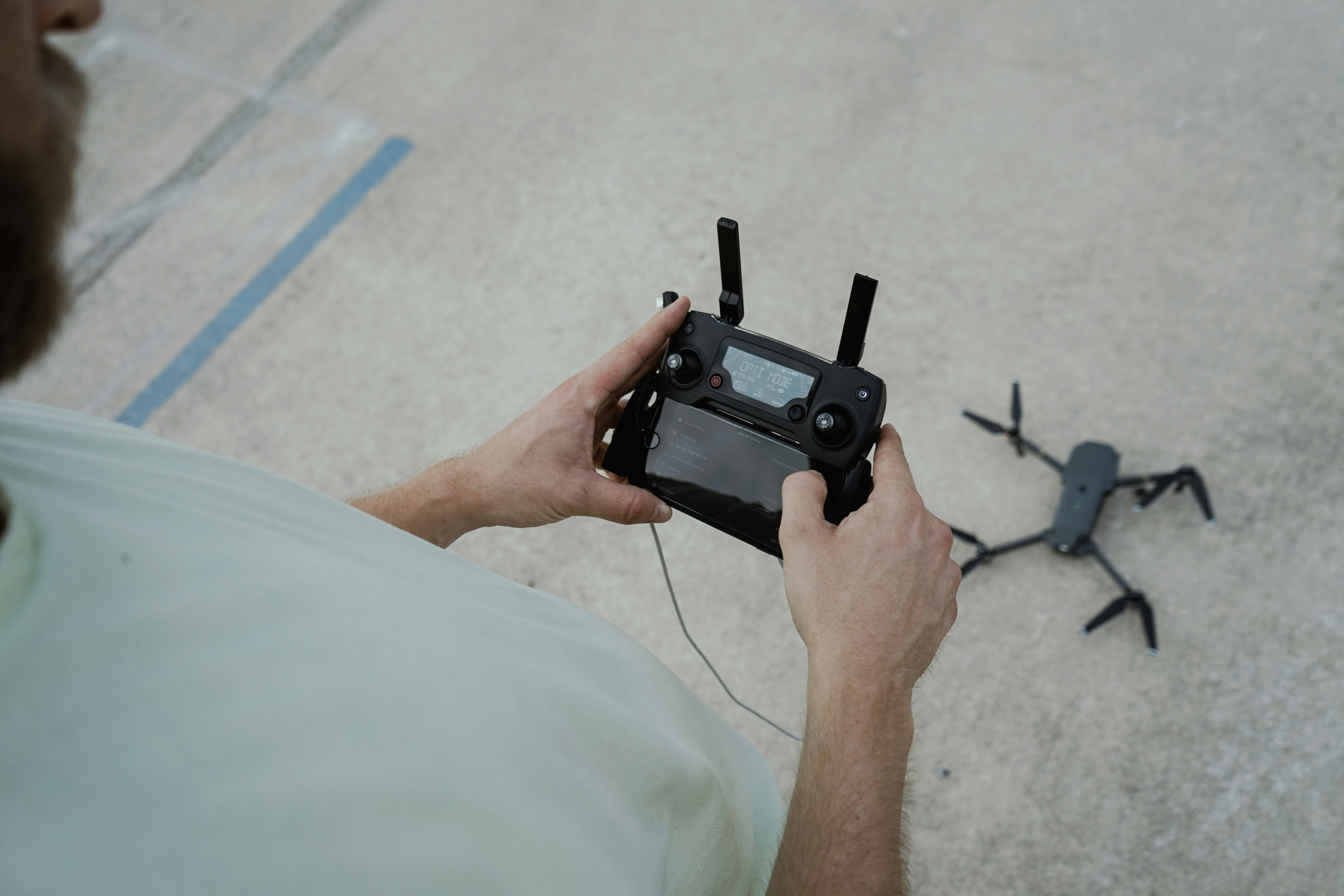
None of this makes free flight useless. Once a pilot has cleared a curriculum like this, free-flying is exactly the right way to consolidate and enjoy the skills that are already built. The problem is only ever with using free flight as the entire training plan for a beginner who doesn't yet know what to work on. For a broader look at how FlightDivision stacks up against the rest of the category on cost, hardware requirements, and overall approach, see Best FPV Simulator 2026: Every Major Option Compared.
Getting Started
You don't need to guess at what to practice next, or build your own training plan out of a free-fly sandbox. FlightDivision runs entirely in the browser with no download and no account required, and it defaults to the gated curriculum described above rather than an open map. If getting into the cockpit quickly matters to you, Plug In and Fly: The Fastest Way to Start FPV Simulator Training walks through exactly how little setup stands between you and your first lesson.
Start the Takeoff and Forward course in the FlightDivision simulator (/sim). Free, in-browser, and ordered from the first lesson through Flow so every session builds on the last one instead of just repeating it.
Frequently Asked Questions
Free flight is an open sandbox with no imposed order: you pick a map and fly whatever you want. A structured curriculum is ordered lessons where each stage assumes the last is solid, with the software gating progression rather than leaving it entirely up to the pilot.
They all offer some tutorial or training content, but free-fly maps are the default center of gravity for most of them. DRL Simulator has the most built-in guided progression of the group; VelociDrone's ordered training tends to come from third-party courses layered on top rather than the simulator itself.
Deliberate practice research shows unstructured practice mostly reinforces whatever habits you already have, while structured practice targets specific weaknesses. A beginner who skips ahead to a skill that depends on one they haven't built yet doesn't skip the gap, they just discover it later, at a worse moment.
Check whether lessons are gated (you can't skip ahead), whether each one names its prerequisite skill, whether progression is based on demonstrated skill rather than a timer, and whether the lesson gives you feedback rather than leaving you to self-diagnose a crash.
Sources
- ScienceDirect, Deliberate Practice (topic overview), retrieved 2026-08-11, https://www.sciencedirect.com/topics/psychology/deliberate-practice
- 10x Flight Training, The Right Stuff, retrieved 2026-08-11, https://10xflight.com/the-right-stuff
- FAA, Aviation Instructor's Handbook (FAA-H-8083-9), Chapter 7, retrieved 2026-08-11, https://www.faa.gov/sites/faa.gov/files/regulations_policies/handbooks_manuals/aviation/aviation_instructors_handbook/09_aih_chapter_7.pdf
- UAVMODEL Insights, FPV Simulator Training Guide: Liftoff, Velocidrone, and DRL Comparison for 2026, retrieved 2026-08-11, https://blog.uavmodel.com/fpv-simulator-training-guide-liftoff-velocidrone-and-drl-comparison-for-2026/


